




Two single-story houses, one brick and one with light siding, both with covered front porches, set behind a mowed lawn and a tall green hedge under large moss-draped oak trees.

Mini Split Installation in Dardanelle, AR

Tell us about the job

Takes about a minute. No obligation.

New system or replacementMini-splitYell County, AR
Step 1 of 2

What ZIP code is the job in?

If you're replacing a window unit or an old ducted system, that equipment has to go somewhere, and it's worth asking who handles that before work starts. A window unit comes out easy enough. A central system is a bigger job, since the old condenser outside has to be disconnected and hauled off, and any refrigerant still in the lines has to be recovered properly rather than vented. If you're keeping your old system running in part of the house and just adding mini splits elsewhere, say so up front, since that changes how the new lines and the new outdoor unit get placed. Ask whether removal and disposal are included or billed separately, because that's a detail that gets missed until the old unit is sitting in the driveway with nowhere to go.

6 months
November through April, your system heats
5 months
May through September, it cools
32°F
the average winter night it heats against
91°F
the average summer afternoon it cools against
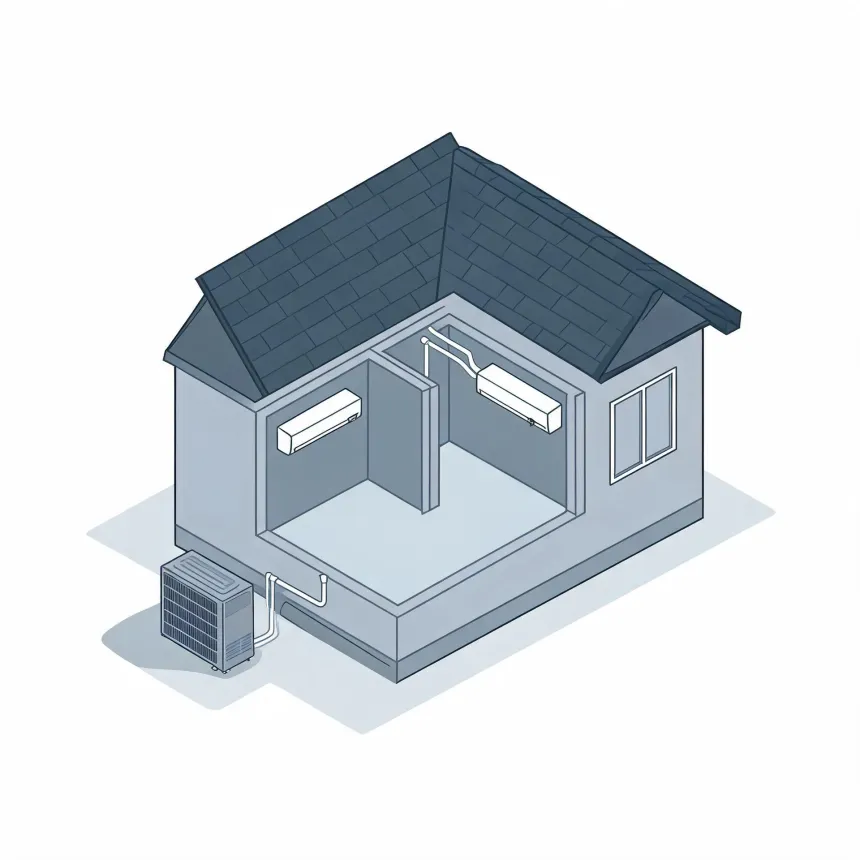
Isometric line illustration of a cutaway house with a shingled gable roof, showing two wall-mounted indoor air conditioning units connected by piping to an outdoor condenser unit on the ground outside.
Your system heats November through April and cools May through September.

NOAA nClimDiv, 1991–2020 normals

Every indoor head needs its own run of refrigerant line and wiring back to the outdoor unit.

More heads and longer runs mean more line to set and more time spent getting each one right.

Get it in before May, while there's still time to choose rather than settle

Cooling runs May through September
Summer afternoons average 91°F
Power costs 12.32 cents a kWh statewide

A mini split here doesn't need to be oversized or loaded with extra capacity for anything specific to this county. Standard sizing, matched to the space it's heating and cooling, is the right call. What matters more is what happens when the power goes out. Yell County saw 43 damaging wind events between 2015 and 2024, and statewide close to a quarter of households went at least a day without power last year. A mini split with no backup power plan sits dark just like a central system would. If backup power matters to you, that's a conversation to have before installation, not after the next outage.

Power is cheap here, so fit and reliability matter more than squeezing out efficiency

Electricity in Arkansas runs 12.32 cents per kilowatt-hour, cheaper than most of the country. That changes the math on which mini split to buy. The highest-efficiency model on the shelf will take longer to earn back its higher price here than it would somewhere with costlier power. Picking the unit that fits your space and holds up matters more than chasing the top efficiency number.

Find a contractor
A white outdoor air conditioner condenser unit mounted on metal wall brackets against gray horizontal siding, with a blue sky and white clouds behind it.

Five months of 91 degree afternoons, every year

Cooling runs May through September here, five months straight, and the afternoon high averages 91°F through June, July and August. A mini split put in this year will spend most of those five months holding the house against that heat, every summer it's in service. That's the load to size for, not a mild stretch now and then. Get the sizing right for the space and the unit keeps up without straining. Undersize it and it runs flat out all summer trying to catch up, which wears on the compressor faster than a unit that's never pushed that hard.

The rating measures the unit, not your bill

The efficiency rating on a mini split's label measures how much heat it moves for the electricity it draws. A higher number means less electricity spent per degree of cooling or heating delivered. It doesn't predict the bill, since that also depends on how the unit is sized for the room and how well it's installed. A top-rated unit set up wrong can cost more to run than a mid-rated one set up right.
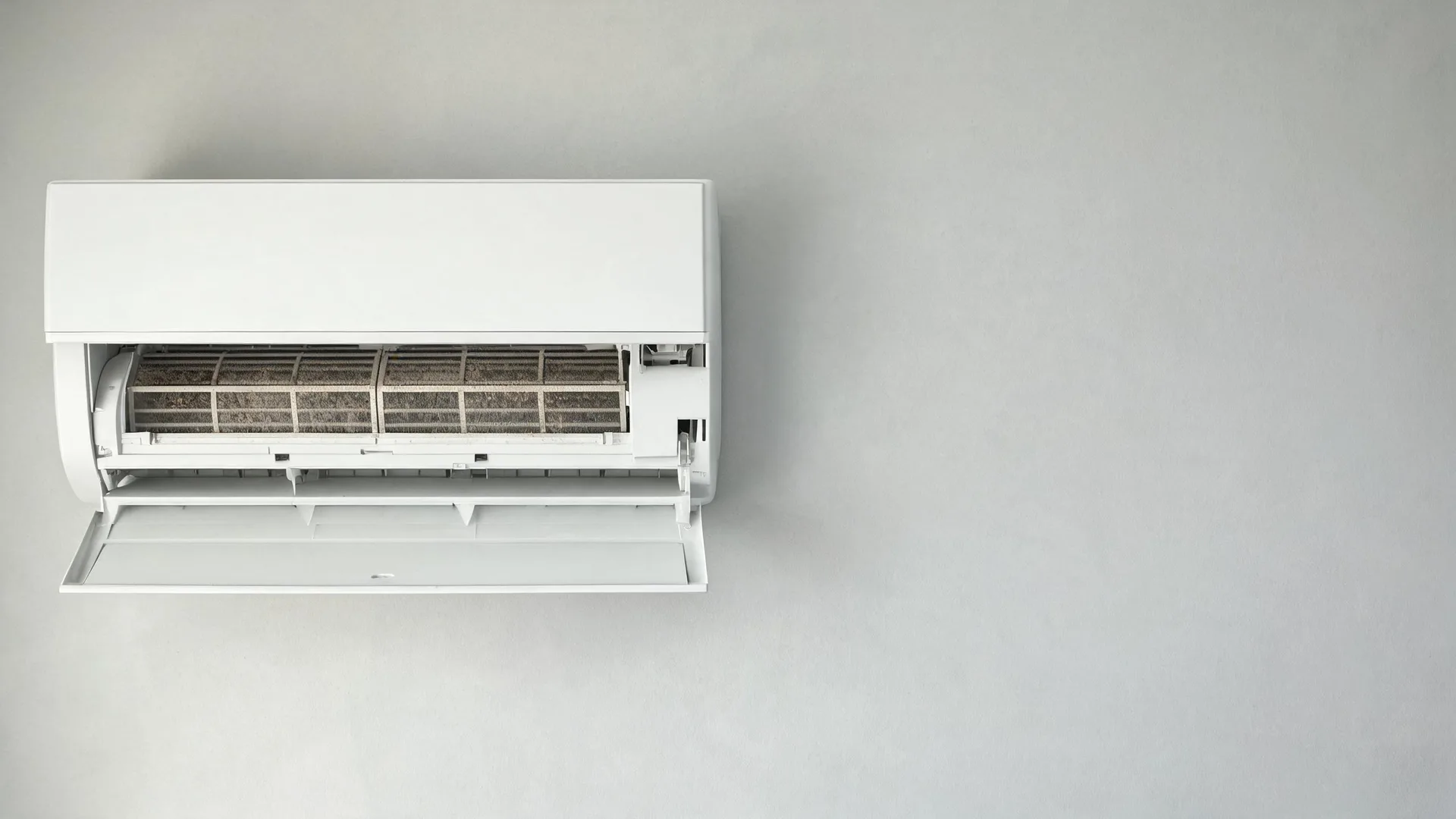
The install decides whether the unit ever reaches that number

A mini split only hits its rated efficiency when the line set is the right length, the refrigerant charge is correct, and the indoor head matches the room it serves. Get any of those wrong and the unit works harder than the label promises. The rating is a ceiling, not a guarantee, and the work done putting the system in is what decides how close it gets.

Sizing a mini split comes down to matching the unit's output to the heat gain and heat loss of the room it serves, nothing more exotic than that. A tech works out how much heat that space picks up in summer and loses in winter, based on the square footage, the ceiling height, how many windows face the sun, and what's on the other side of the walls. Too big and the unit short cycles, reaching the set temperature fast and shutting off before it's pulled the moisture out of the air, which leaves the room cold and clammy. Too small and it runs constantly, straining to keep up and never quite getting there on the hottest or coldest days. Each indoor head gets sized to its own room rather than the house as a whole, since a mini split isn't one system pushing air everywhere through ducts, it's separate heads each carrying their own load. Get the sizing wrong on one head and that room suffers even if every other room in the house is comfortable.

Install day starts with the outdoor unit, usually set on a pad or mounted bracket against an exterior wall, far enough from the wall to pull air through the coil properly. From there the crew runs the line set to each indoor head, which means drilling a hole through the wall for the refrigerant lines, the wiring, and the condensate drain. Each indoor head gets mounted to a plate, leveled, and connected back to that line set. Once everything's run and connected, the lines get pressure tested to check for leaks before any refrigerant goes in, then pulled down to a vacuum to clear out air and moisture that don't belong in the system. Only after that passes does the refrigerant get released to charge the system and the unit gets powered on and checked at each head.