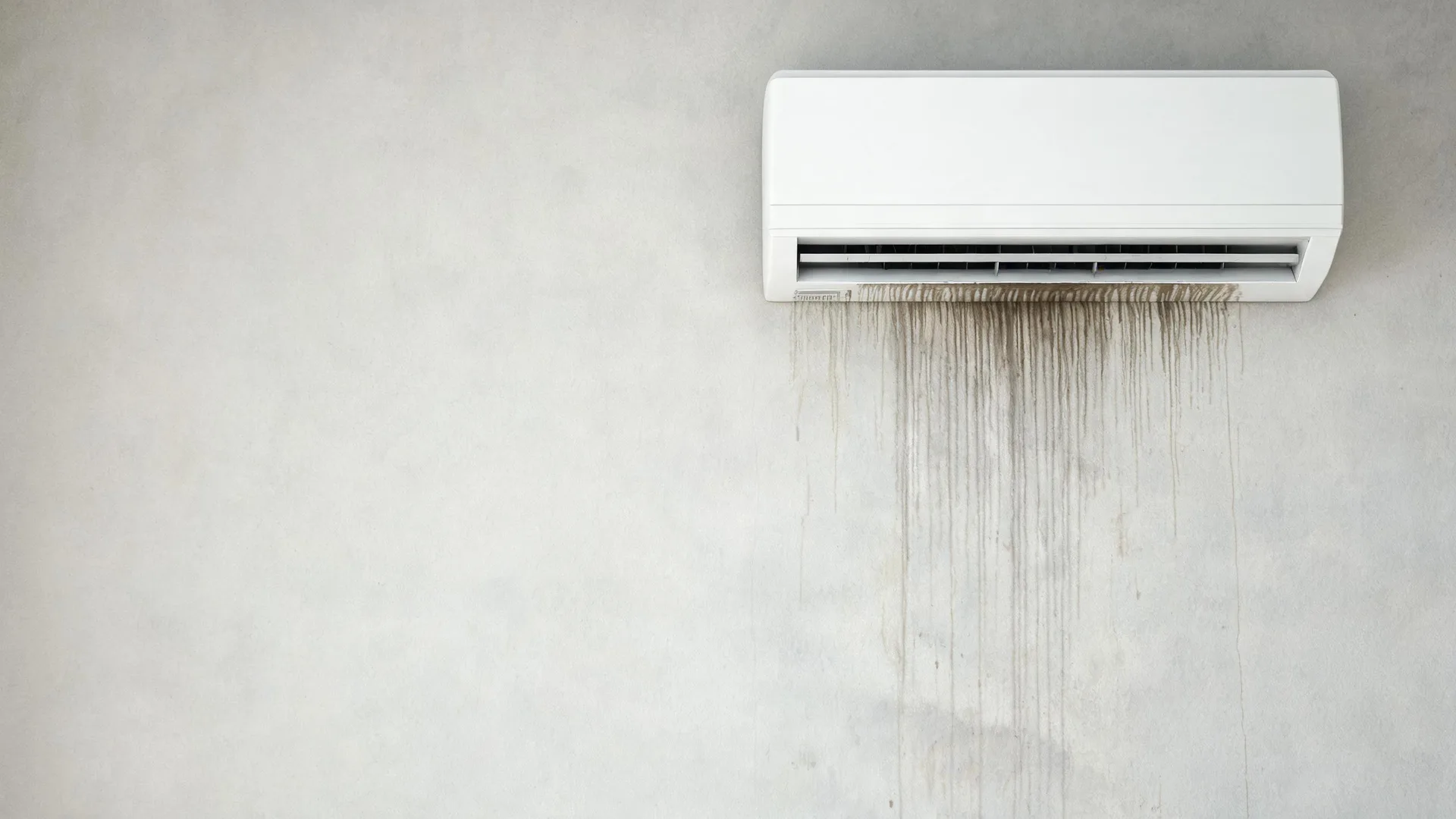
Five months of real load
A mini split in Crossett runs cooling from May through September, with afternoon highs averaging 91°F across June, July and August. That's steady work, not the occasional hot week.
Takes about a minute. No obligation.
A mini split in Crossett runs cooling from May through September, with afternoon highs averaging 91°F across June, July and August. That's steady work, not the occasional hot week.
A unit sized off a mild day will struggle once June hits and run long hours trying to catch up. Have the contractor size it to the June through August heat, since that's the load it has to meet every year.
NOAA nClimDiv, 1991–2020 normals
Half the homes in Ashley County were built in 1977 or earlier.
A mini split going into a house that old has to be matched to the walls and rooms it actually has, not a standard layout.




Ashley County sits in climate zone 3A under the 2021 energy code. Any mini split going in here has to meet the federal minimum for a split-system heat pump, 14.3 SEER2 for cooling and 7.5 HSPF2 for heating. That standard doesn't carve out a separate class for ductless systems, so a mini split is held to the same floor as any other split-system heat pump. A federal tax credit is available for qualifying equipment, worth asking the contractor about when comparing quotes. The number on the spec sheet matters less than whether the unit is sized and installed to actually hit it in your rooms.
Most of Ashley County heats with electricity already, so a mini split fits into how this area runs rather than against it. For a home that currently heats with gas or propane, it's one more thing to weigh before deciding.
Find a contractor
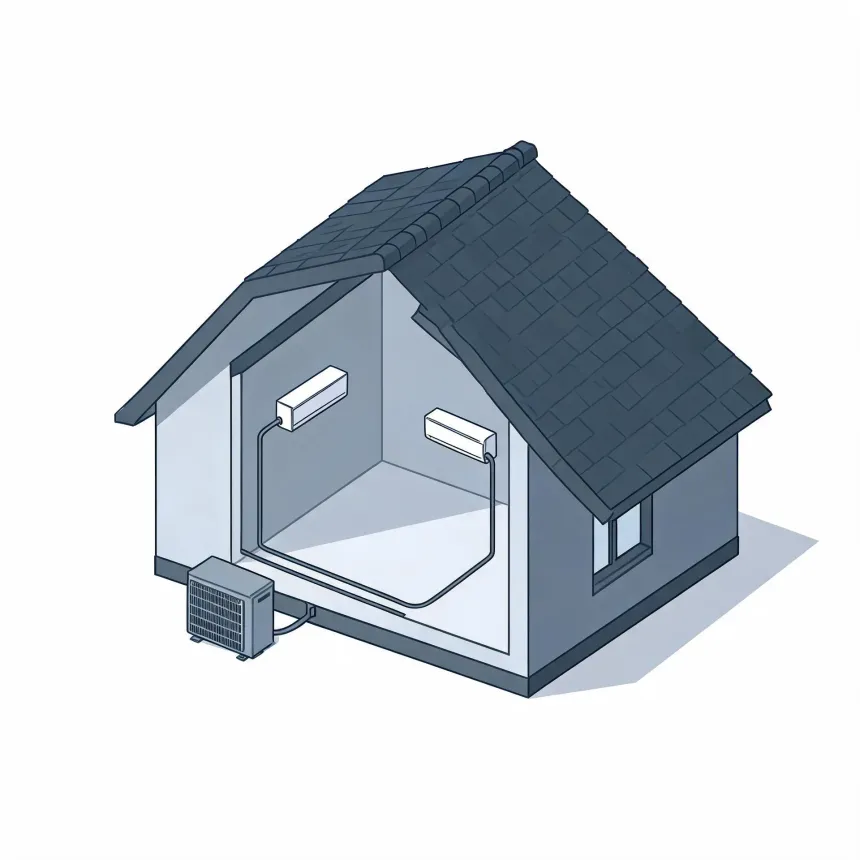
Have the contractor walk the house before quoting the job, especially if it was built in 1977 or earlier. Where the lines run, where the outdoor unit sits, how many zones it takes to cover the rooms, all of that depends on the layout you actually have. A proposal based on square footage alone skips the part that matters.
A contractor works out the right size by adding up what the house actually needs to shed. Window area and which way they face, ceiling height, how many rooms the air has to reach, what sits above and below each room. Houses that look alike on paper can need different equipment once that math gets done. Square footage alone skips too much of it.
A mini split that's too big satisfies the thermostat fast, then shuts off before it's run long enough to pull humidity out of the air. The room reads cool but feels damp. A unit sized correctly runs longer, steadier cycles and dries the air while it cools it, which is a big part of what makes a room feel comfortable.
Ask how many zones the quote assumes and why. One outdoor unit can run several indoor heads, but each zone has to be sized to the room it serves, not just split evenly off the total load. Ask what happens if one indoor head needs service. A good system lets a contractor isolate one zone without shutting the rest down. Ask about the line set length and how many turns it takes to reach outside, since a longer run with more bends affects performance in a way a square footage number won't show. Get the warranty terms in writing, including whether it requires the installer to register it or do specific maintenance to stay valid.
Installation starts with a walkthrough, not a ladder. The contractor marks where each indoor head goes, where the outdoor unit will sit, and the path the line set and drain take between them. Once that's set, mounting the indoor head and outdoor unit is the fast part. The work that takes time is running the line set, pulling it through the wall, connecting the refrigerant lines, and pulling a vacuum on the system to clear out air and moisture before refrigerant ever moves through it. Skipping that vacuum step is the most common shortcut, and it's the one that shortens a system's life. Once the lines are charged and the electrical is tied in, the contractor runs the system through both heating and cooling to check airflow at each head and confirm the refrigerant charge is correct, not just that air is blowing.