





A illuminated white antebellum-style house with a wraparound porch, white columns, and Spanish-moss-draped oak trees, photographed at dusk.

Mini Split Installation in Clinton, AR

Tell us about the job

Takes about a minute. No obligation.

New system or replacementMini-splitVan Buren County, AR
Step 1 of 2

What ZIP code is the job in?

Most homes in Van Buren County run on electric heat, 59.4% of them. Gas service only reaches 12.1% of households, so a lot of homes here never had a gas line to begin with. A mini split fits that setup well, since it runs on electricity like the baseboard heat or furnace it might replace. If your home currently heats with propane, a mini split can still work alongside it or replace it for the rooms you use most. Either way, you're not fighting the fuel type your house was already built around.

7 months
October through April, your system heats
5 months
May through September, it cools
30°F
the average winter night it heats against
88°F
the average summer afternoon it cools against
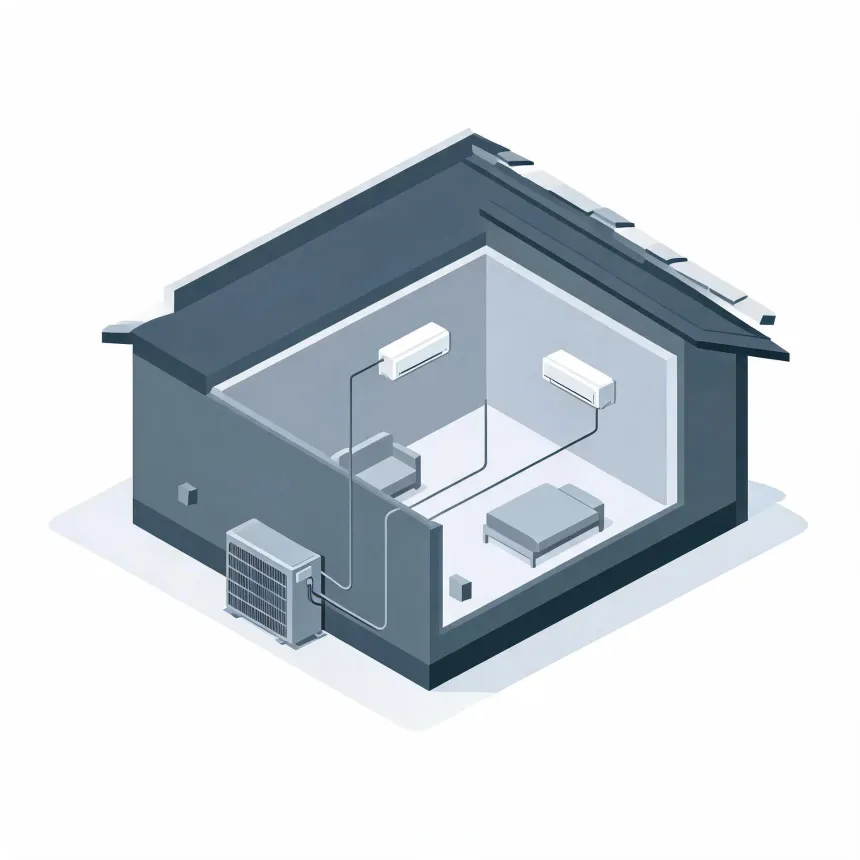
Isometric illustration of a cutaway house interior showing two wall-mounted indoor air conditioning units connected by line sets to an outdoor condenser unit beside the exterior wall.
Your system heats October through April and cools May through September.

NOAA nClimDiv, 1991–2020 normals

Electricity in Arkansas runs 12.32 cents per kilowatt-hour, cheaper than most states.

A mini split still costs less to run than baseboard heat, but the payback on the priciest high-efficiency model takes longer here.

Clinton weather calls for a system that holds up, not one sized bigger than it needs to be

73 severe weather events from 2015 to 2024
24% of homes statewide lost power a day or more in 2024
40 damaging wind events from 2015 to 2024
A system sized right for ClintonHalf the homes in Van Buren County were built in 1986 or earlier, ordinary territory for a standard mini split.

That changes what's worth paying for in Clinton. A mid-efficiency mini split heats and cools the same rooms as a top-tier model, just with a smaller gap in the power bill between them. Put the difference toward the install itself, like a second indoor head for the room that never holds temperature, or a better job of sizing the unit to the space. A contractor who knows the area can tell you where the efficiency rating actually earns its keep and where it's just a number on the spec sheet.

Get it in before May

Cooling starts in May here. If your mini split goes in during April, it's running on your timeline, with time to work out any kinks before the heat sets in.

Find a contractor
A white mini-split air conditioner outdoor condenser unit mounted on metal brackets against a beige stucco exterior wall, with a blue sky and scattered clouds in the background.

What the rating actually measures

That efficiency number on the label comes from a lab test, not your living room. It's a ratio of heat moved to energy used, checked across a range of outdoor temperatures with the unit cycling the way it would in mild weather. A mini split earns its best numbers running low and steady, which is what it does most of the time. It earns its worst numbers on the coldest and hottest days, when the compressor has to work near its limit just to keep up. So the rating is telling you about the easy months, not the hard ones. A unit with a high rating and a poor install can still struggle on those extreme days, because sizing and ductwork and where the outdoor unit sits all matter as much as the number on the spec sheet.

Where the money goes

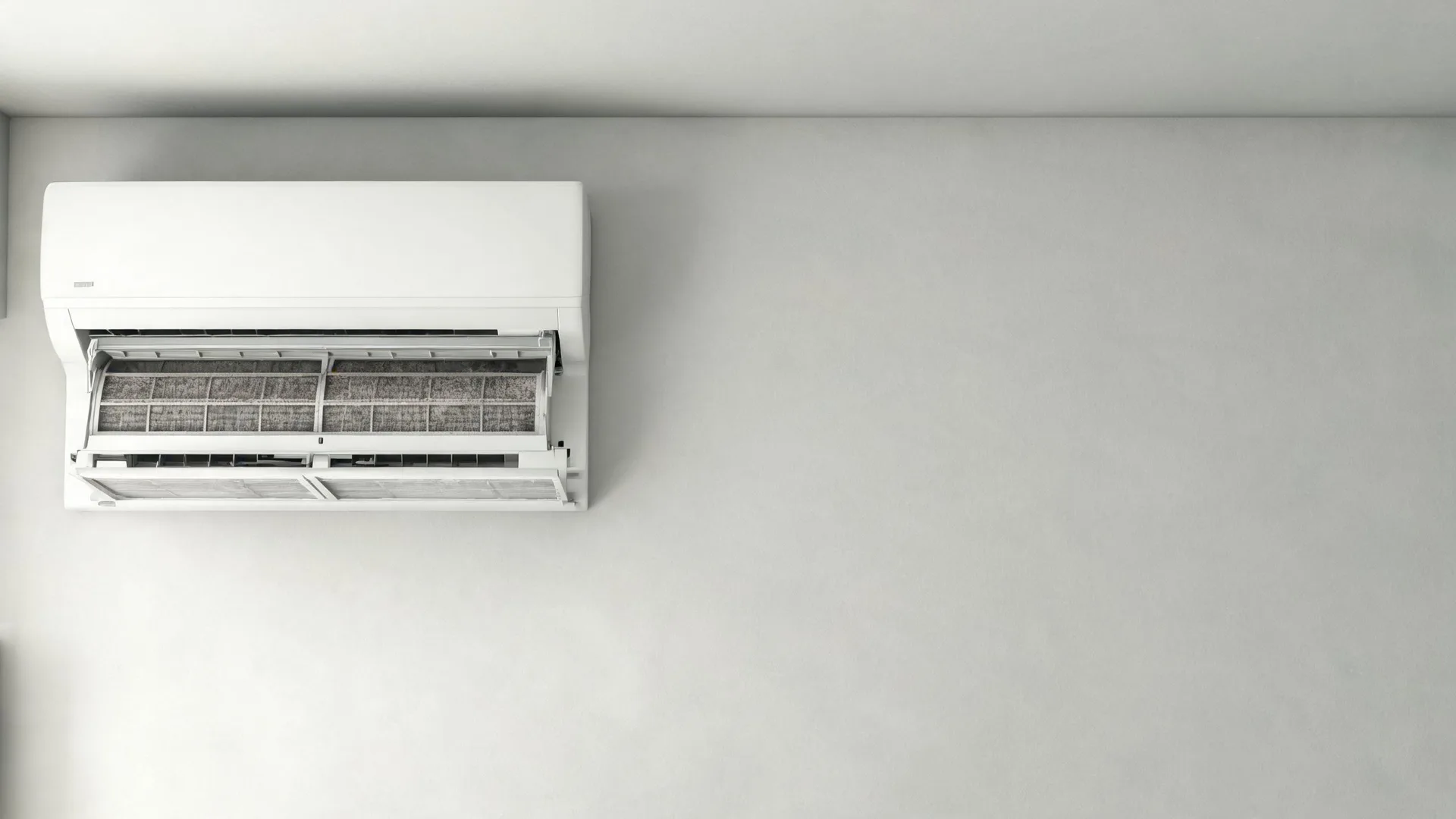
The unit itself is only part of the bill. Line set length, how far the indoor head sits from the outdoor unit, and whether the wall it passes through is brick, siding or something tougher all change how long the job takes. A straightforward wall with a short run costs less labor than a long line set snaked through a finished space.
Why more heads cost more than you'd think

Each indoor head needs its own line set, its own mounting, and its own spot on the outdoor unit's capacity. Adding a second zone isn't just another box on the wall. It's more refrigerant line, more wiring, and an outdoor unit sized to carry both without either one running short on the coldest or hottest day.

Whoever installs the mini split still has to deal with what's already on the wall or in the closet. If the old system is a window unit or baseboard heaters, those get pulled out and hauled off, and the wall or floor underneath usually needs some patching. If it's a central system going away, there's a furnace or air handler and an outdoor condenser to disconnect and remove, plus whatever ductwork isn't being reused. A contractor doing the work will cap off any old refrigerant lines or gas lines that aren't staying in service, not just leave them capped and forgotten behind a wall. None of that old equipment gets left for you to deal with. Ask ahead of time whether removal and haul away is part of the quote, because some bids cover it and some expect you to arrange disposal yourself.

Installation day starts with the outdoor unit and works inward. The crew mounts the compressor on a pad or bracket, runs the line set through the wall, and that's the one hole the whole system depends on, so where it goes matters more than it looks like it should. Each indoor head gets hung on its own bracket, leveled, and connected before anyone touches the refrigerant. Once the lines are run and sealed, the system gets evacuated with a vacuum pump to pull out moisture and air, because any left behind turns into a problem for the compressor down the road. Only after that vacuum holds does the refrigerant go in and the unit get powered on, checked, and set to actually move air into the room it's supposed to heat or cool.