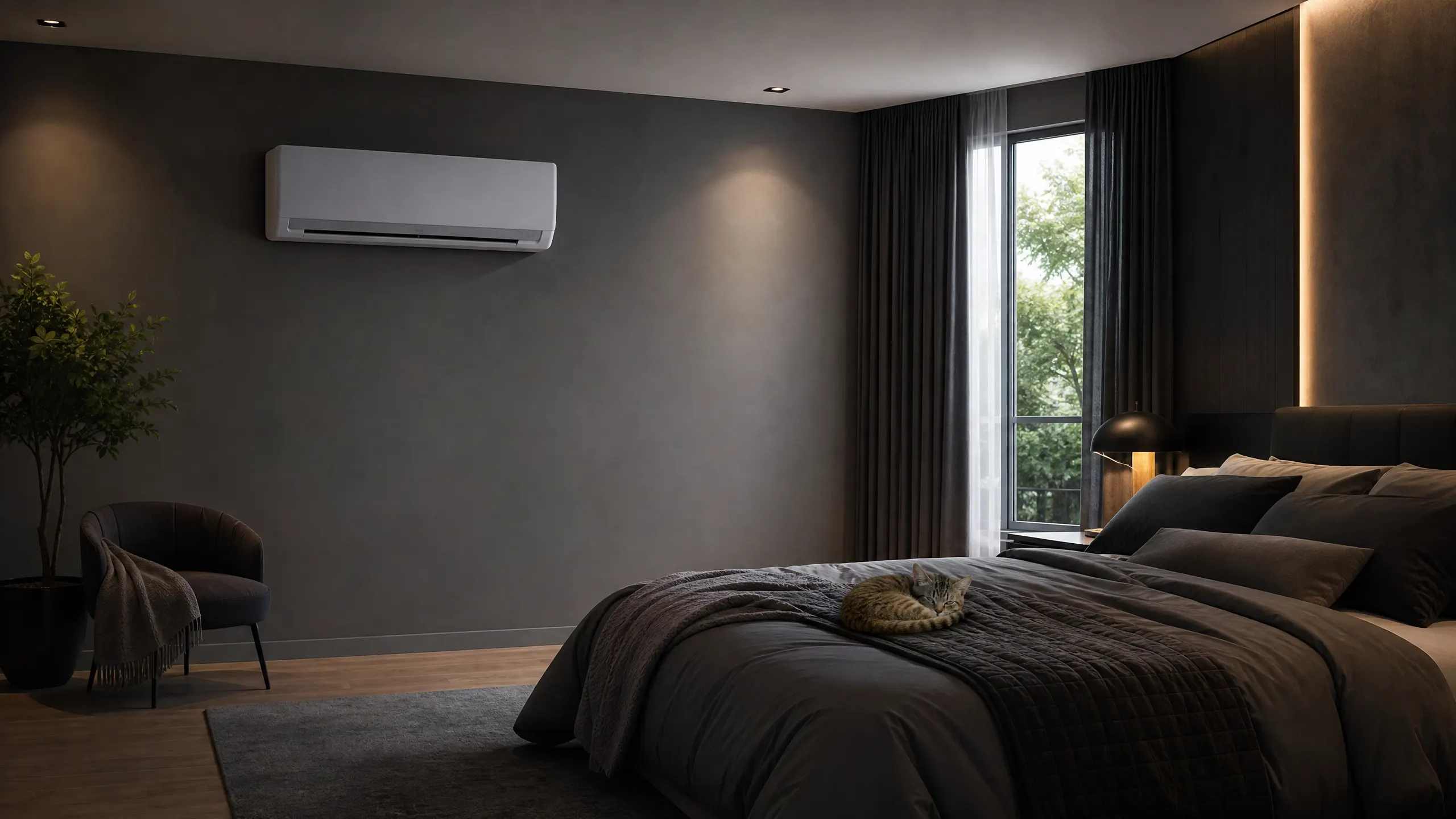




A tabby cat sleeps on a large bed in a dark, modern bedroom equipped with a wall-mounted air-conditioning unit.

Mini Split Installation in Clarksville, AR

Tell us about the job

Takes about a minute. No obligation.

New system or replacementMini-splitJohnson County, AR
Step 1 of 2

What ZIP code is the job in?

Most homes in Johnson County heat with electricity, close to six in ten. A mini split fits right into that picture, since it runs on electricity too and gives you both heat and air conditioning from one system. Gas heat is less common here, at about a quarter of homes, and propane trails behind that. If your place already runs on electric heat, a mini split is simply swapping one electric system for another, not asking your home to take on a new fuel it was never set up for.

7 months
October through April, your system heats
5 months
May through September, it cools
30°F
the average winter night it heats against
88°F
the average summer afternoon it cools against
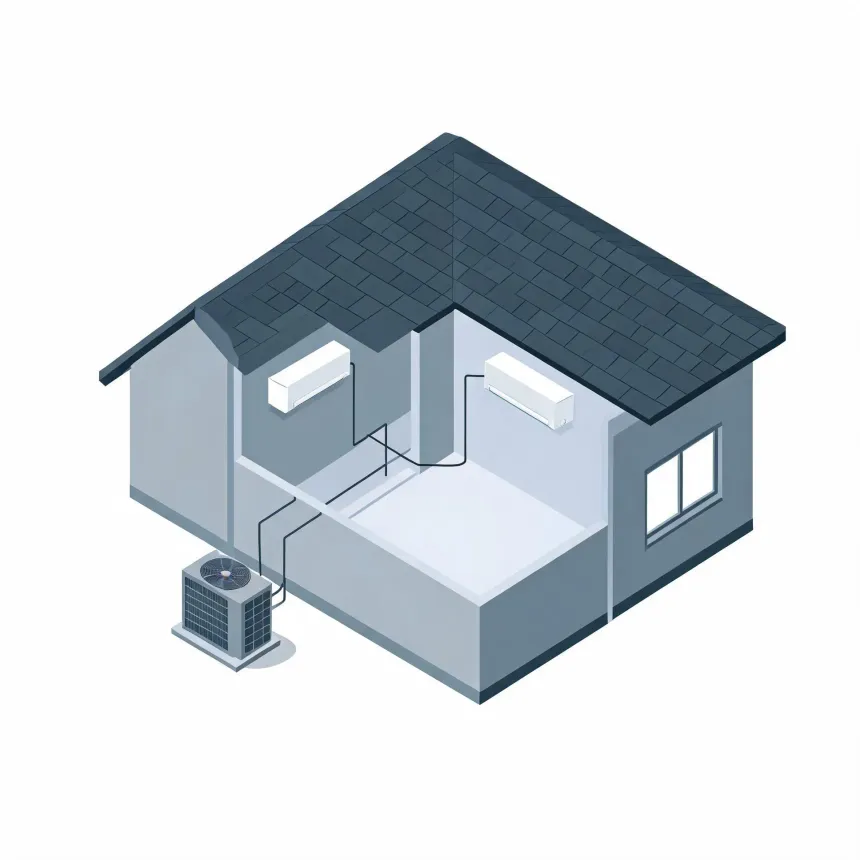
Isometric illustration of a cutaway gray house with a dark shingled roof, showing two wall-mounted indoor air conditioning units connected by lines to an outdoor condenser unit on the ground outside.
Your system heats October through April and cools May through September.

NOAA nClimDiv, 1991–2020 normals

Johnson County sees damaging wind, hail and the occasional tornado, and the power can go out for a day or more when storms roll through.

None of that calls for an oversized or special mini split. A correctly sized system handles Clarksville's weather the same way it would anywhere else.

At 12.32 cents a kilowatt-hour, a pricier high-efficiency unit takes longer to earn back its cost here

Power costs 12.32 cents a kWh statewide
Cooling runs May through September
Summer afternoons average 88°F

Cooling here runs May through September. April is the month to get a mini split in, not May. Once the heat sets in, a failing system becomes an emergency, and you end up taking whatever install date a contractor can give you. Doing it in April means you pick the date, the contractor has time to size the unit properly for your place, and the whole job isn't rushed because you're already sweating. It also means the system is broken in and running right before the months it has to work hardest.

A standard mini split handles Clarksville summers fine

Five months of cooling, with afternoons near 88°F in June, July and August, is a normal load for a mini split to carry. Nothing about that calls for going bigger or spending more on a higher-efficiency unit than this place needs. A standard size, sized correctly for your home, handles it.

Find a contractor
A beige split-system air conditioner outdoor condenser unit mounted on metal wall brackets atop a stucco wall.

What that efficiency number does and doesn't tell you

The rating on the label is a ratio, how much cooling or heat you get for the electricity the unit uses. A higher number means the compressor and coil are pulling more out of every bit of power. It says nothing about how big a space the unit can cover. A high-efficiency unit that's undersized will still run constantly and still leave a room too warm or too cold. Sizing is a separate question from efficiency, and both need to be right. The rating also assumes correct installation. A unit with a strong rating on paper will not hit that number if the refrigerant charge is off or the line set wasn't sized right for the run. Where a higher rating pays off most is in a system that runs long hours across most of the year. The fewer months a system works hard, the less time it has to make up the difference in what a higher-efficiency unit costs over a standard one.

Where the cost actually goes

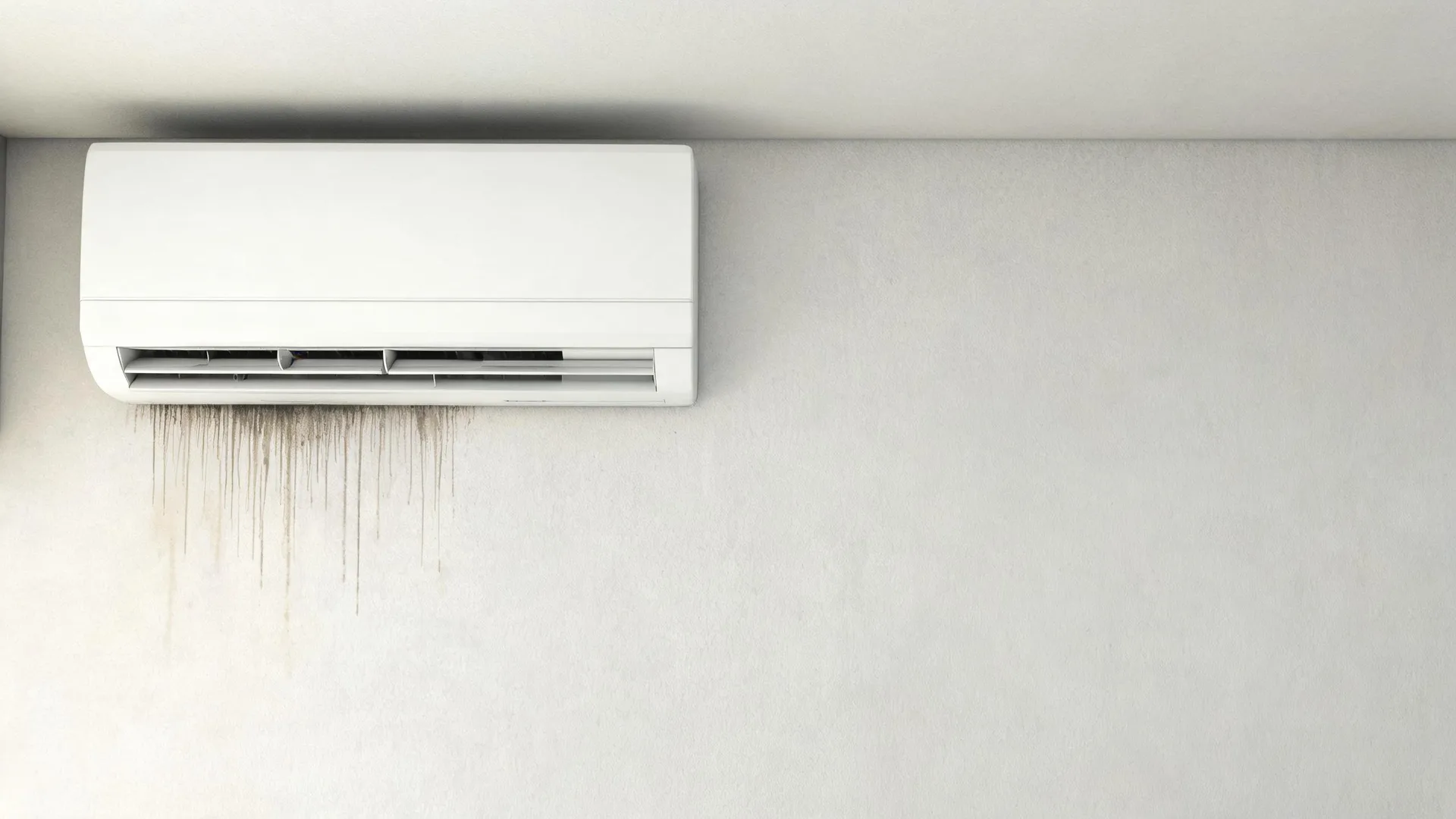
The unit itself is only part of the bill. The rest is labor. A contractor has to run the line set between the outdoor condenser and the indoor head, run a dedicated electrical circuit, and mount both halves somewhere that works for airflow and drainage. A short, straightforward run between indoor and outdoor units costs less than one that has to travel through framing, around corners, or up through multiple floors.
Why more than one zone changes the job

A single indoor head tied to one outdoor unit is the simplest install there is. Add a second or third zone and the job grows in more ways than the equipment list does. The outdoor unit has to be sized to carry every head running at once. The electrical and line sets multiply along with it. A contractor also has to balance capacity across rooms so one zone doesn't starve the others. Each added head brings its own labor, not just its own price tag.

When you're getting quotes, ask each contractor to walk you through how they arrived at the size, not just the number they landed on. A proper sizing calculation looks at your square footage, your windows, your insulation and how the rooms connect, and contractors can reasonably land on different numbers depending on how they weigh those things. Ask what happens to the old system, whether the line set gets reused or replaced, and where the new electrical circuit will run. Ask how many zones they're proposing and why, since adding zones isn't automatically better if it just adds cost without solving a real comfort problem. Ask what the warranty covers on labor, not just on the equipment, since a mini split that's installed wrong will cause problems no manufacturer warranty touches.

Sizing a mini split comes down to how much heat moves through a space, not how big the room looks by eye. A contractor works out the heat load by adding up floor area, ceiling height, window placement, and how well the walls and attic hold temperature. A room with a wall of west-facing glass can need a bigger head than a similar room without one, even if the floor space is the same. Go too big and the unit blasts the air cold, shuts off, and leaves the room clammy because it never ran long enough to pull the moisture out. Go too small and it runs nonstop, straining to reach a setpoint it can't hold on the hardest days. Either mistake wears on the compressor, since neither lets the system settle into a steady cycle.