





A red brick single-story house with a covered porch and a nearby cream-colored house with a wraparound porch, seen across a lawn behind a trimmed hedge, framed by large moss-draped oak branches.

Mini Split Installation in Cherokee Village, AR

Tell us about the job

Takes about a minute. No obligation.

New system or replacementMini-splitSharp County, AR
Step 1 of 2

What ZIP code is the job in?

More than half the homes in Sharp County heat with electricity, and another third run on bottled or LP gas. Almost nobody here is on utility gas. That makes a mini split an easy fit, since it runs on electricity like most of what's already in the house. For homes on LP, a mini split takes the load off the propane tank for both heating and cooling, which can mean fewer deliveries through the year. Either way, there's no gas line to plan around and no venting to worry about.

7 months
October through April, your system heats
5 months
May through September, it cools
29°F
the average winter night it heats against
88°F
the average summer afternoon it cools against
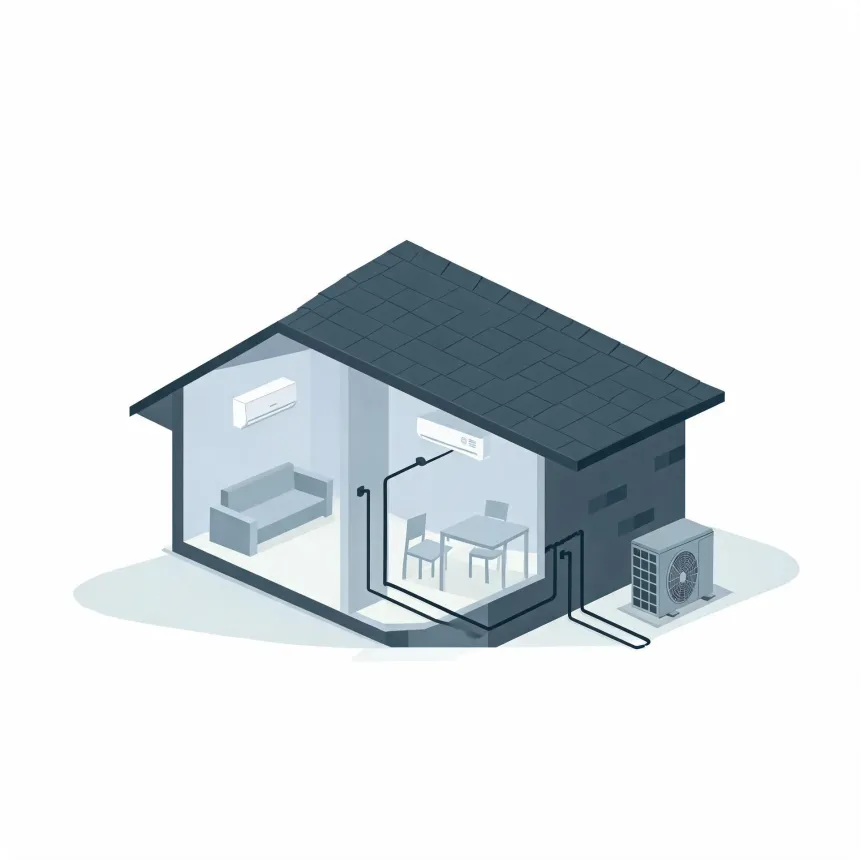
Isometric illustration of a cutaway single-story house showing two wall-mounted mini-split indoor units connected by line sets to an outdoor condenser beside the building, with a sofa, table and chairs inside.
Your system heats October through April and cools May through September.

NOAA nClimDiv, 1991–2020 normals

Half the homes in Sharp County were built in 1978 or earlier.

A mini split doesn't care either way. Sizing it right comes down to the room, not the year on the house.

April is the month to get it in, before May asks it to work

Cooling runs May through September
Summer afternoons average 88°F
Power costs 12.32 cents a kWh statewide
Summer runs May through September hereAfternoon highs average 88°F in June, July and August

Sharp County is zone 3A, warm with mild winters and summers that run long. Any mini split installed here has to meet the federal minimum that applies to split systems. That means 14.3 SEER2 for cooling and 7.5 HSPF2 for heating, ductless or not. Most units sold new already clear that bar, so it mainly rules out older stock still sitting in a warehouse. A system that meets it is also worth checking against the federal energy efficiency tax credit before you buy.

Pick it for fit, not for the efficiency rating

Electricity in Arkansas ran 12.32 cents a kilowatt-hour in 2024, cheaper than most of the country. A high-efficiency mini split will still cost less to run than what it replaces, but the extra you'd pay to go above the federal minimum takes longer to earn back here. Put the weight on getting the right size and a contractor who installs it right.

Find a contractor
A white mini-split air conditioner outdoor condenser unit mounted on metal brackets against a beige stucco exterior wall, with a blue sky and scattered clouds in the background.

It's running on the mild days too, not just the extremes

A mini split doesn't shut off between seasons the way some people expect. The outdoor compressor modulates up and down to match the load, so it's doing something even on a mild day, not sitting idle waiting for a hot stretch. The indoor head runs on the fan side just as often, pulling air across the coil whenever it's set to run. Ask a contractor how the system behaves on a day that's neither hot nor cold, since a unit that modulates smoothly puts less wear on the compressor than one that only knows full blast or off. Ask also how it performs running low and steady for long stretches, because that's where the difference between units shows up, not in a burst of heating or cooling but in the long quiet runs between them. A compressor built to idle well tends to last, and that matters more over time than how fast it can hit full output.

How many rooms it has to reach

A single head covers one room well. A whole house means either several heads tied to one outdoor unit or several separate systems, and each head, each line set, each spot the crew has to run refrigerant line through a wall adds to the job. The outdoor unit has to be sized for the total load, not for any one room.
What the installer finds once the wall is open

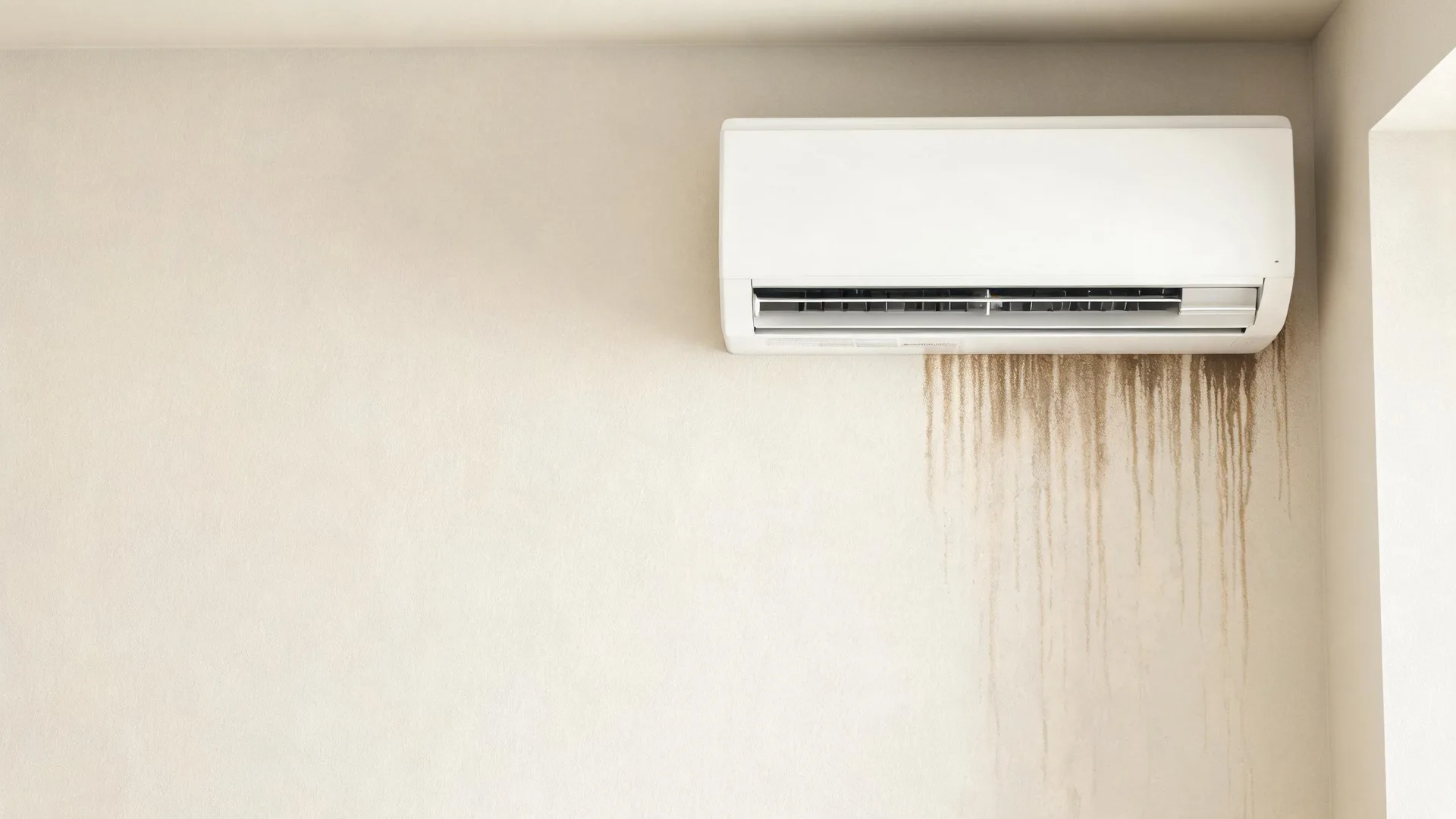
Where the lines run and where the condensate drains depends on the wall itself. Stud spacing, what's behind the drywall, how far the indoor head sits from where the outdoor unit can go, all of that decides how much line and labor the job takes before a contractor cuts anything. Homes running the same system can still take different amounts of work to finish.

If this is replacing a furnace and central air, that equipment doesn't have much life after removal. A furnace is mostly a steel cabinet, a heat exchanger and a blower, and none of that gets reused. The old refrigerant lines and the indoor coil come out too, since a mini split doesn't connect to any of it. If there's a window unit or an older ductless system involved instead, the refrigerant inside has to be recovered properly before the lines get cut, not vented. A contractor pulling out an old system should be able to tell you how it leaves the property, whether that's hauled off with the job or left for the homeowner to handle separately. Worth asking before the work starts, not after.

Install day starts outside, mounting the outdoor unit on a pad or brackets and running the line set in to wherever each indoor head goes. Each wall penetration gets sleeved and sealed before anything else moves forward. Inside, the crew mounts the head, connects the line set, the condensate drain and the control wiring, then the lines get connected at both ends and the whole system gets pulled down to a vacuum. That vacuum step matters more than people expect, since any moisture or air left in the lines will shorten the compressor's life later. Once it holds vacuum, the refrigerant charge gets set and the system runs through its paces, heating and cooling, to check airflow at every head and confirm nothing's short cycling. A contractor should walk through the thermostat or remote with you before leaving, since a mini split doesn't work quite like a furnace or central air thermostat.