





A row of single-story houses, the nearest of red brick with a covered porch and others with light siding, set behind a mowed lawn and a tall trimmed hedge, with large oak trees draped in Spanish moss overhead.

Mini Split Installation in Bull Shoals, AR

Tell us about the job

Takes about a minute. No obligation.

New system or replacementMini-splitMarion County, AR
Step 1 of 2

What ZIP code is the job in?

Electricity heats 59.1% of homes in Marion County, more than any other fuel. Bottled or LP gas covers another 15.6%, which shows up in homes without gas line service running past them. A mini split runs on electricity, so it fits right into a home already set up that way, no new fuel line or tank needed. For a propane household, it gives another way to heat and cool rooms without leaning on the tank as hard. Either way, the system matches what's already feeding the house.

7 months
October through April, your system heats
5 months
May through September, it cools
28°F
the average winter night it heats against
88°F
the average summer afternoon it cools against
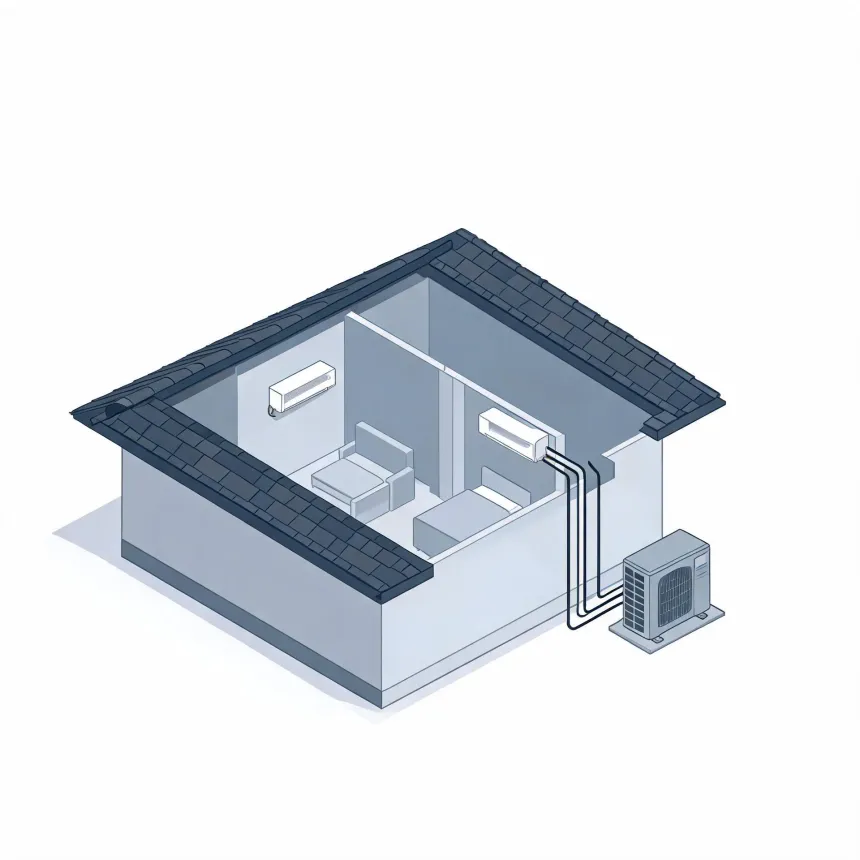
Isometric illustration of a cutaway house with tiled roof showing two wall-mounted indoor mini-split units connected by line sets to an outdoor condenser beside the building.
Your system heats October through April and cools May through September.

NOAA nClimDiv, 1991–2020 normals

Marion County has seen its share of windstorms and hail over the past decade.

A standard mini split handles Bull Shoals winters and summers fine, no bigger or pricier unit needed for this.

Five months of cooling, and nothing unusual about it

Cooling runs May through September
Summer afternoons average 88°F
Power costs 12.32 cents a kWh statewide

Electricity in Arkansas ran 12.32 cents a kilowatt-hour in 2024, cheaper than most of the country. That changes the math on a mini split. A high efficiency unit still costs less to run month to month than a standard one, but with power this cheap, the gap between them takes longer to make up. So picking a mini split here comes down less to squeezing out every efficiency point and more to getting a unit sized right for the rooms it covers, installed well, and built to hold up. A contractor can walk through the efficiency tiers and what each costs up front, but in Bull Shoals, reliability and a good fit for the space are worth weighing just as heavily as the SEER2 number on the spec sheet.

A mini split that meets the standard is already the right fit

Bull Shoals sits in climate zone 4A, which asks real work of both heating and cooling. Any mini split installed new has to hit 14.3 SEER2 for cooling and 7.5 HSPF2 for heating, the same minimum as any other split-system heat pump. A federal tax credit is available on qualifying equipment. Worth asking a contractor which units on their lineup qualify before deciding.

Find a contractor
A man in a cap, dark jacket and brown pants, seen from behind, climbs stone steps toward a green front door while carrying a worn canvas tool bag.
A beige split-system air conditioner outdoor condenser unit mounted on metal wall brackets atop a stucco wall.

Sized for the load, not the square footage

A mini split runs on a compressor built for long, steady runs, not quick blasts. Sized right, it ramps up to meet the load and holds there, cycling far less than a system that's too big for the space. An oversized unit cools the room fast, shuts off, then kicks back on a few minutes later. All that starting and stopping wears the compressor harder than a long steady run ever would, and the room swings between too cold and not cold enough instead of holding steady. Sizing starts with a load calculation, not a guess based on square footage. It accounts for the room's exposure, how many windows it has, what's on the other side of its walls, and how the room gets used, then matches that load to a unit that can cover it without running oversized or undersized. Get it right and the system just runs, quietly, for years. Get it wrong and it shows up as a room that never quite feels right, no matter how long the unit runs.

How many rooms it has to reach

A mini split for one room is a simple job. Mount the indoor head, run the line set to the outdoor unit, wire it in, done. Add rooms and the job changes shape. Each extra zone needs its own indoor head and its own run of line set, plus another branch off the outdoor unit. The outdoor unit has to be sized to handle every zone running at once, so more zones can push it into a bigger size class entirely.
What the walls and roof allow

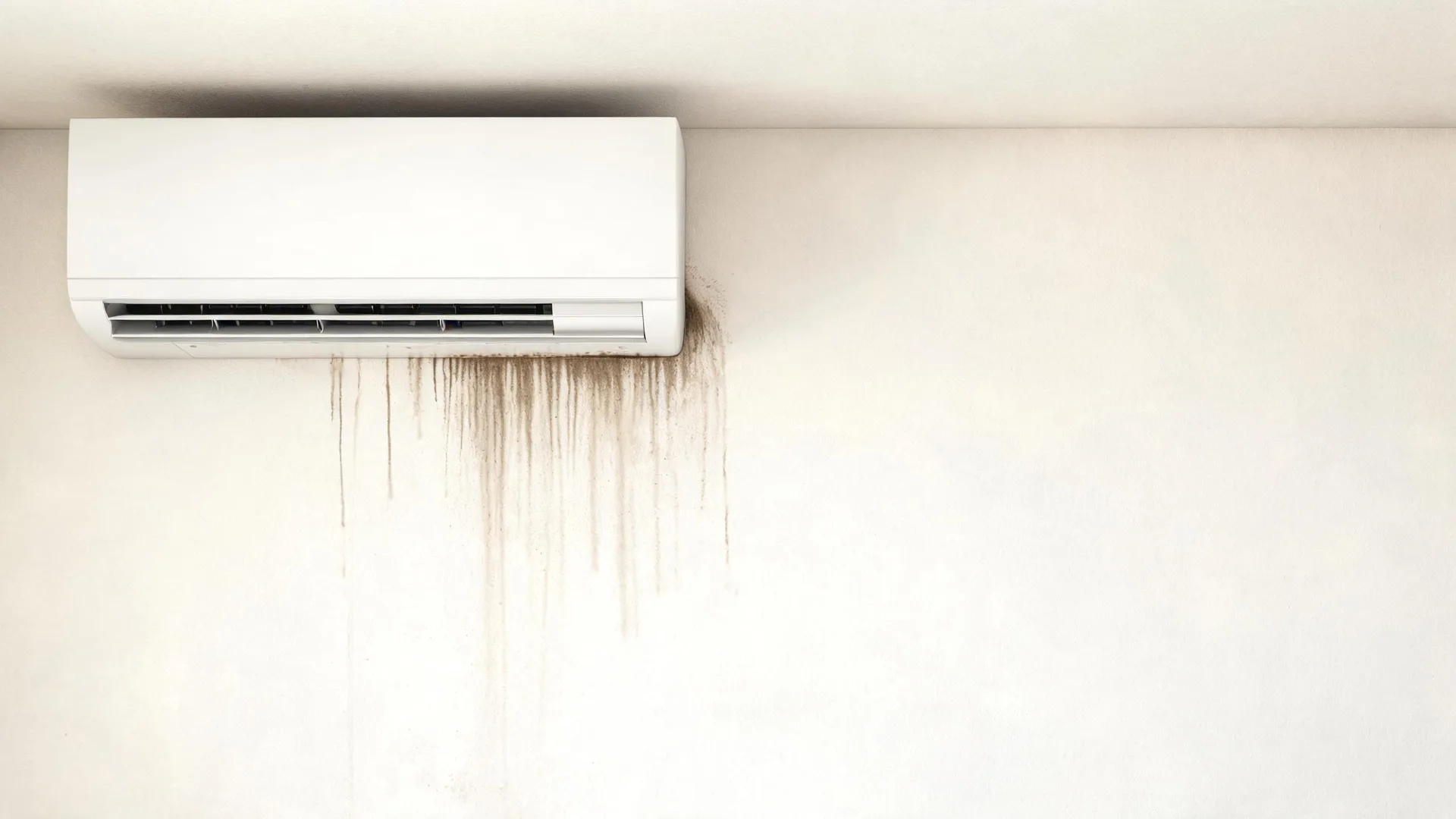
The line set has to travel from the indoor head to the outdoor unit somehow, and the path it takes sets the labor. A straight shot through an exterior wall is quick work. A run up through an attic, across a roofline, or down through multiple floors takes a lot longer. That kind of run may need extra line set, extra mounting hardware, or a condensate pump to move water where gravity won't. The harder the path, the more hours it takes to do right.

Taking out the old system depends on what's there. A window unit or portable AC is simple, it unplugs and comes out. A central system or old split is more involved, since the indoor and outdoor units, the line set, and any ductwork tied to it all have to come out too. If the old unit used refrigerant, that refrigerant has to be recovered properly before any lines get cut, not vented into the air. Mounting brackets and old electrical whips get pulled so the new install isn't working around leftover hardware. None of this adds much time to the job, but skipping it means the next system goes in on top of someone else's leftovers instead of a clean wall and a clear path.

Install day starts with the walls, not the equipment. The indoor head needs a clear flat section with room for air to pull in and push out, and the spot picked has to line up with where the line set can actually reach the outdoor unit. Once that's settled, mounting the indoor head and drilling through for the line set is quick work. The slower part is the line set itself. The refrigerant lines, the condensate drain and the electrical whip all have to run from indoor to outdoor, then get connected at the outdoor unit. After everything's connected, the system gets pressure tested to make sure there are no leaks before any refrigerant moves through it. Then the lines get vacuumed down to pull out moisture and air, since either one left behind will cause problems later. Only after all that does the unit get charged and switched on, so a tech can check that it's heating and cooling the way it should before calling the job done.