





A gray cat sleeps curled up on a dark-made bed in a moody, minimalist bedroom with a wall-mounted air conditioning unit and warm accent lighting.

Mini Split Installation in Benton, AR

Tell us about the job

Takes about a minute. No obligation.

New system or replacementMini-splitSaline County, AR
Step 1 of 2

What ZIP code is the job in?

Taking out the old system is part of the job, not an afterthought. If there's an old window unit or a wall sleeve, that gets pulled and the opening gets dealt with so it isn't just leaking air through a hole in the wall. If this is swapping out an older mini split, the installer needs to recover the refrigerant from the lines before anything comes apart, since that refrigerant can't just be vented into the air. The old outdoor unit, the indoor head, and the line set all come down and get hauled off. Any abandoned mounting brackets or old electrical whips should come out too, not get left behind for the new installer to work around. A clean pull makes the new install faster, since the crew isn't fighting old hardware to get the new lines and mounts in the right spot.

5 months
November through March, your system heats
5 months
May through September, it cools
33°F
the average winter night it heats against
90°F
the average summer afternoon it cools against
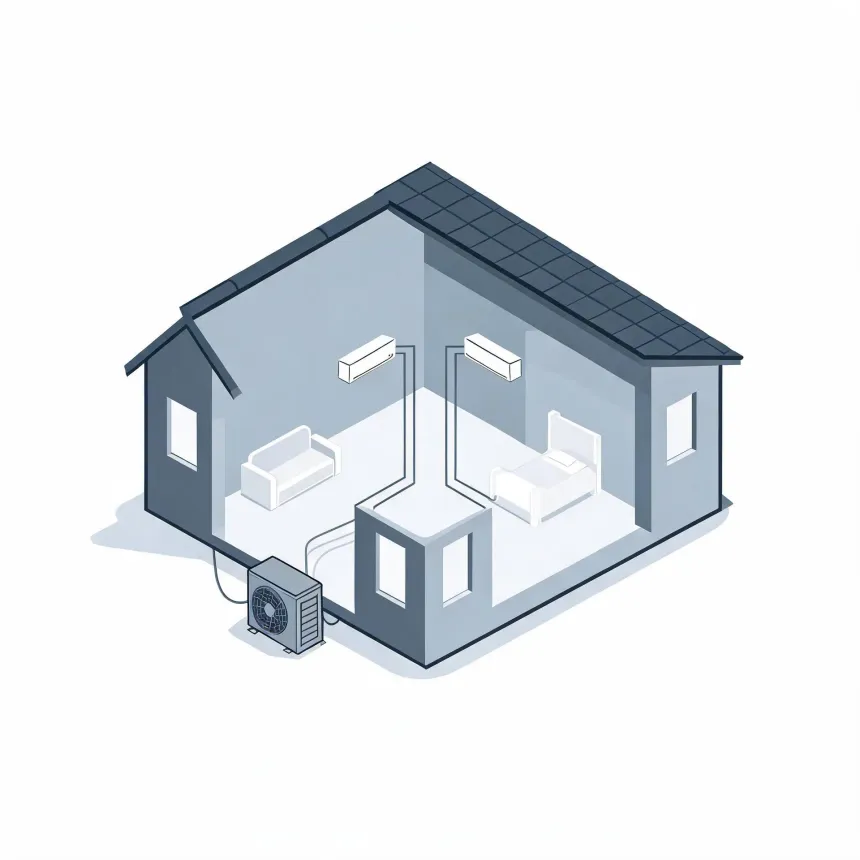
Isometric cutaway illustration of a small house showing two wall-mounted indoor air conditioning units connected by lines to a single outdoor condenser unit beside the building, with a sofa in one room and a bed in another.
Your system heats November through March and cools May through September.

NOAA nClimDiv, 1991–2020 normals

A standard mini split, sized right for the room, handles a Benton home without any upgrade.

No need to pay for extra capacity or a higher efficiency tier than this job calls for.

Five months of 90 degree afternoons means this system doesn't get a break

Cooling runs May through September
Summer afternoons average 90°F
67 hail events from 2015 to 2024
Have it in before MayCooling runs May through September in Saline County, so April is the month to get it done.

Most homes in Saline County heat with electricity, 56.6 percent, more than any other fuel. Gas service reaches 38 percent, with a small slice on bottled or LP gas. A mini split fits an electric home without any changes to how the house gets its heat. It isn't an add-on system fighting a furnace for the job. It runs on the same power the rest of the house already uses, heating and cooling from the same unit. For a home already set up this way, swapping in a mini split is a straight match, not a conversion.

The system has to meet zone 3A's efficiency minimum. A new install already clears it.

Any mini split installed here has to hit 14.3 SEER2 for cooling and 7.5 HSPF2 for heating, the federal minimum for this climate zone. That's the floor, not an upgrade, so it's already built into a standard installation. A federal tax credit is available on top of that for equipment that qualifies.

Find a contractor
A man in a dark long-sleeved shirt and olive pants carries a canvas tool bag as he walks up wooden porch steps toward a green front door, with a potted shrub to the left.
A white outdoor air conditioner condenser unit mounted on metal wall brackets against gray horizontal siding, with a blue sky and white clouds behind it.

Size it for the worst afternoon, not the average one

Get the load calculation done on your home, not a guess based on square footage. A unit sized a notch too small will run flat out all five months and still lose ground on the hottest afternoons. One sized right cycles on and off like it should and holds the room even at 90 degrees. This is the one step that decides whether the system handles the summer here or struggles through it.

Square footage alone doesn't size a system

A room's load depends on how many windows it has, which way they face, what's above and below it, and how well it holds the temperature the rest of the house is set to. A load calculation walks through all of that room by room. A chart that just matches square footage to a unit size skips all of it, and it shows up later as a system that never quite gets the room right.
The wrong size fails in its own way

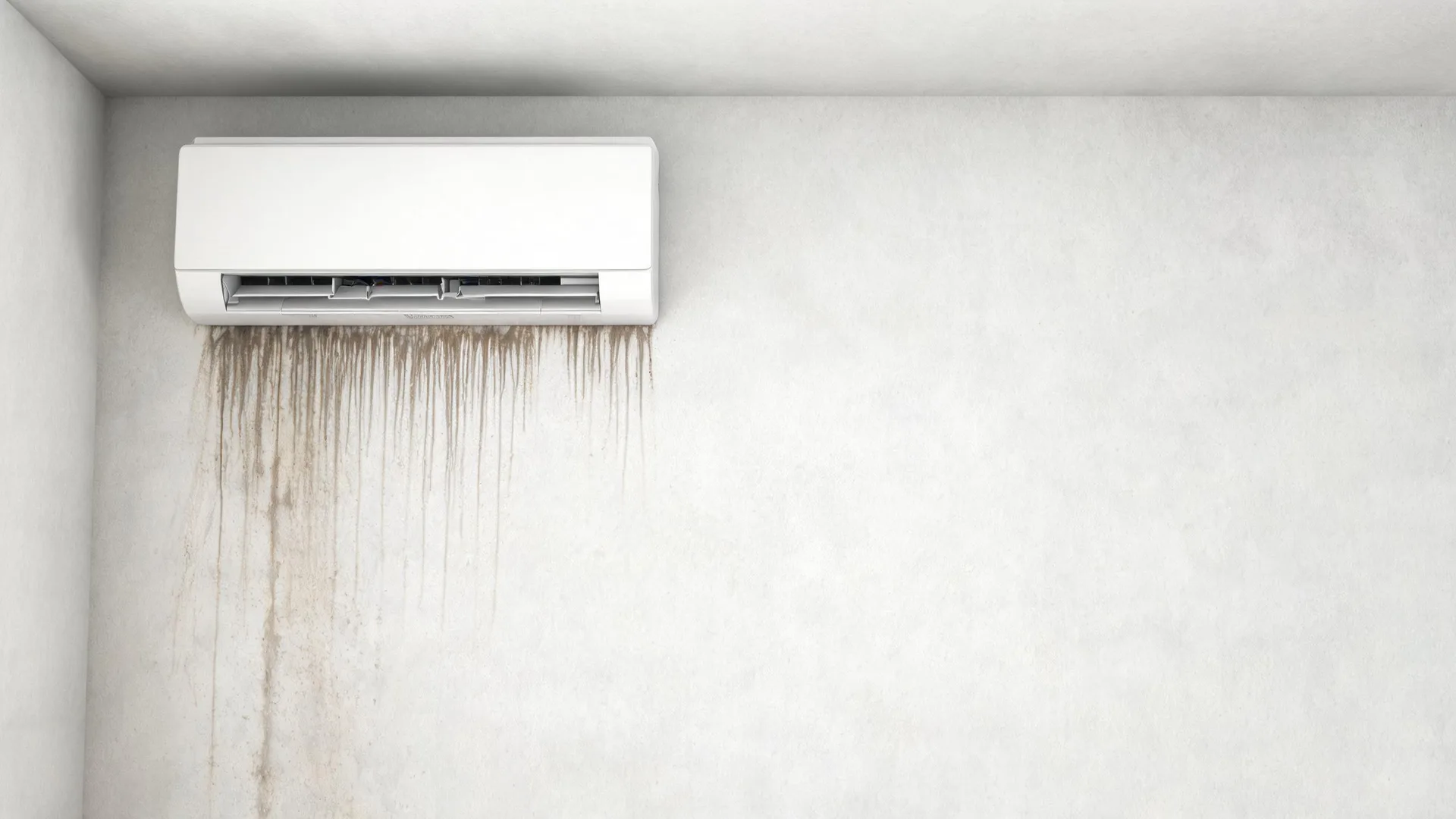
A unit too big for the room blasts cold air, hits the thermostat setting fast, and shuts off before it's run long enough to pull the moisture out of the air. The room reads the right temperature but still feels damp. A unit too small never gets ahead of the load at all. It runs constantly, the room never quite settles at the setting, and the system wears from running flat out instead of cycling the way it's built to.

A few things push the price of a mini split install up or down, and most of it comes down to what the crew has to do before they can even hang the equipment. Running new line set is one. A short, straight run between the outdoor unit and the indoor head costs less in labor than a run that has to snake through an attic or around framing. The number of indoor heads matters too. A single zone is a simpler install than a multi-zone system feeding several rooms off one outdoor unit, since each additional head means another line set run and another mounting job. Electrical work plays into it as well. If the home already has a dedicated circuit in the right spot, that's one less thing to install. If not, running new wire from the panel adds to the job. Where the outdoor unit sits matters, too. A straightforward pad on the ground is a different job than a wall mount that needs brackets rated for the weight.

On install day, the first work is mounting the indoor head on its bracket and running the line set out to where the outdoor unit will sit. The line set gets vacuumed down to pull out any air and moisture before the refrigerant is released into it, since either one left in the lines causes problems later. The installer checks that vacuum holds steady, because a line that won't hold means a leak at a flare fitting or a joint, and that gets fixed before the system ever runs. Once the lines are charged, the outdoor unit gets leveled on its pad or brackets, since one sitting crooked puts strain on the compressor over time. Electrical gets tied in last, and then the whole system runs through a cycle to check that the head is actually cooling and the line set connections are holding pressure. Nothing gets closed up or buttoned down until that check is done.