





A lit antebellum-style two-story house with white columns and a wraparound porch at night, framed by live oak trees draped in Spanish moss.

Mini Split Installation in Arkadelphia, AR

Tell us about the job

Takes about a minute. No obligation.

New system or replacementMini-splitClark County, AR
Step 1 of 2

What ZIP code is the job in?

Most homes in Clark County heat with electricity, 60.3% of them. Utility gas covers another 28.6%, with a smaller share on bottled or LP gas. A mini split fits naturally where electric heat is already the norm, since it runs on electricity and can handle both heating and cooling from one outdoor unit. If your home currently heats with electric baseboard or an older electric furnace, swapping in a mini split often means lower electric use for the same job rather than a change in fuel type at all.

5 months
November through March, your system heats
5 months
May through September, it cools
33°F
the average winter night it heats against
91°F
the average summer afternoon it cools against
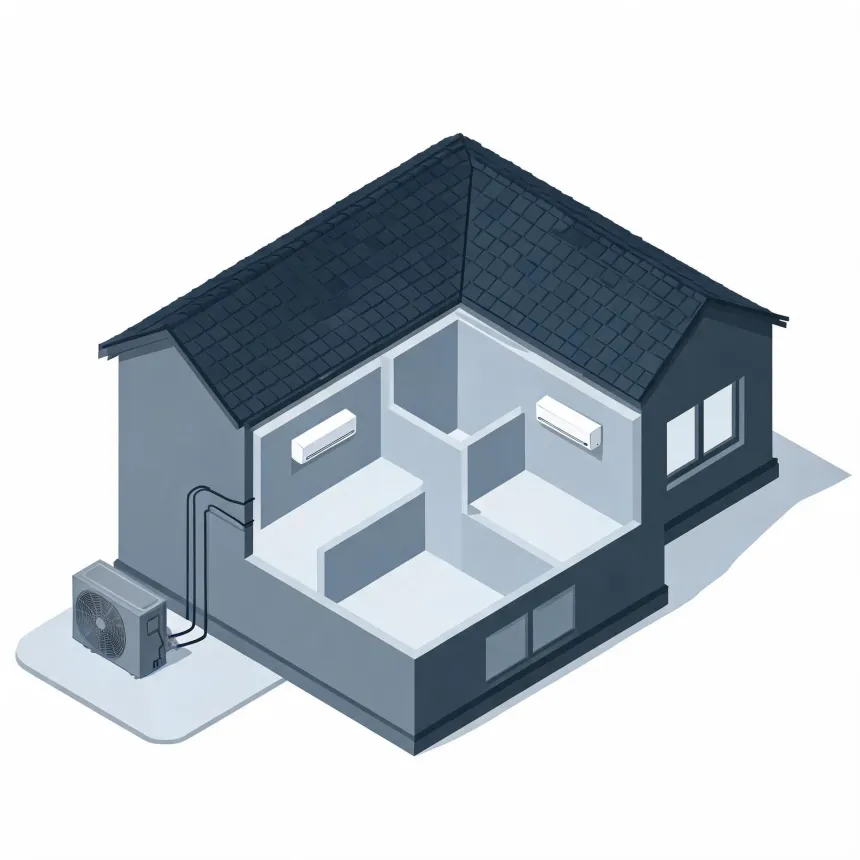
Isometric illustration of a cutaway single-story house with a dark shingled roof, showing two wall-mounted indoor air conditioning units connected by lines to an outdoor condenser unit on a pad beside the building.
Your system heats November through March and cools May through September.

NOAA nClimDiv, 1991–2020 normals

A mini split here runs on the same electricity Arkadelphia homes already pay 12.32 cents per kilowatt-hour for.

No special sizing or high-efficiency model is needed to make the switch pay off.

Five months of 91 degree afternoons is what a mini split here has to beat

Cooling runs May through September
Summer afternoons average 91°F
Power costs 12.32 cents a kWh statewide
April is the month to get this doneCooling runs May through September here, so April is when to put a mini split in.

Clark County falls in zone 3A. Any mini split installed here has to clear the federal minimum for that split-system class, 14.3 SEER2 for cooling and 7.5 HSPF2 for heating. That's the floor, not a special high-efficiency tier, so it narrows the field to units built to meet it rather than ruling much out. Since a mini split is a heat pump, it also qualifies for the federal energy efficiency tax credit, which covers a share of both the equipment and the installation cost. The minimum applies to units manufactured from 2023 onward, so if you're comparing older stock against something newer, that's worth checking.

A standard mini split is the right fit for Arkadelphia

Clark County sees its share of damaging wind and hail, and storms here have knocked out power for about a quarter of Arkansas households at some point in a year. None of that calls for a bigger or higher-efficiency mini split than what's already standard for this zone. A properly sized unit built to the zone 3A minimum handles the heat, the cold snaps, and the swings between them just fine.

Find a contractor
A white outdoor air conditioner condenser unit mounted on metal wall brackets against gray horizontal siding, with a blue sky and white clouds behind it.

Running five months a year means sizing has to be right the first time

Five months of cooling a year, with afternoons averaging 91 degrees through June, July and August, means more run hours than most mini splits see elsewhere. That's not a reason to size up. A unit sized to the room it serves will cycle on and off as it should and keep up fine through the stretch. Size one for a hotter day than this county actually gets and it'll short cycle instead, which wears the compressor faster than the heat does. Get the load calculated room by room before you buy, and pick the contractor by how carefully they do that, not by who quotes the lowest number.

How many zones you're running

A single indoor head costs less to install than a system feeding several rooms off one outdoor unit. Each added zone means another line set run, another mounting spot, and another indoor unit to hang and wire. The outdoor unit also has to be sized for the combined load of every zone it feeds, so more zones can mean a larger outdoor unit too.
What the line set has to get through

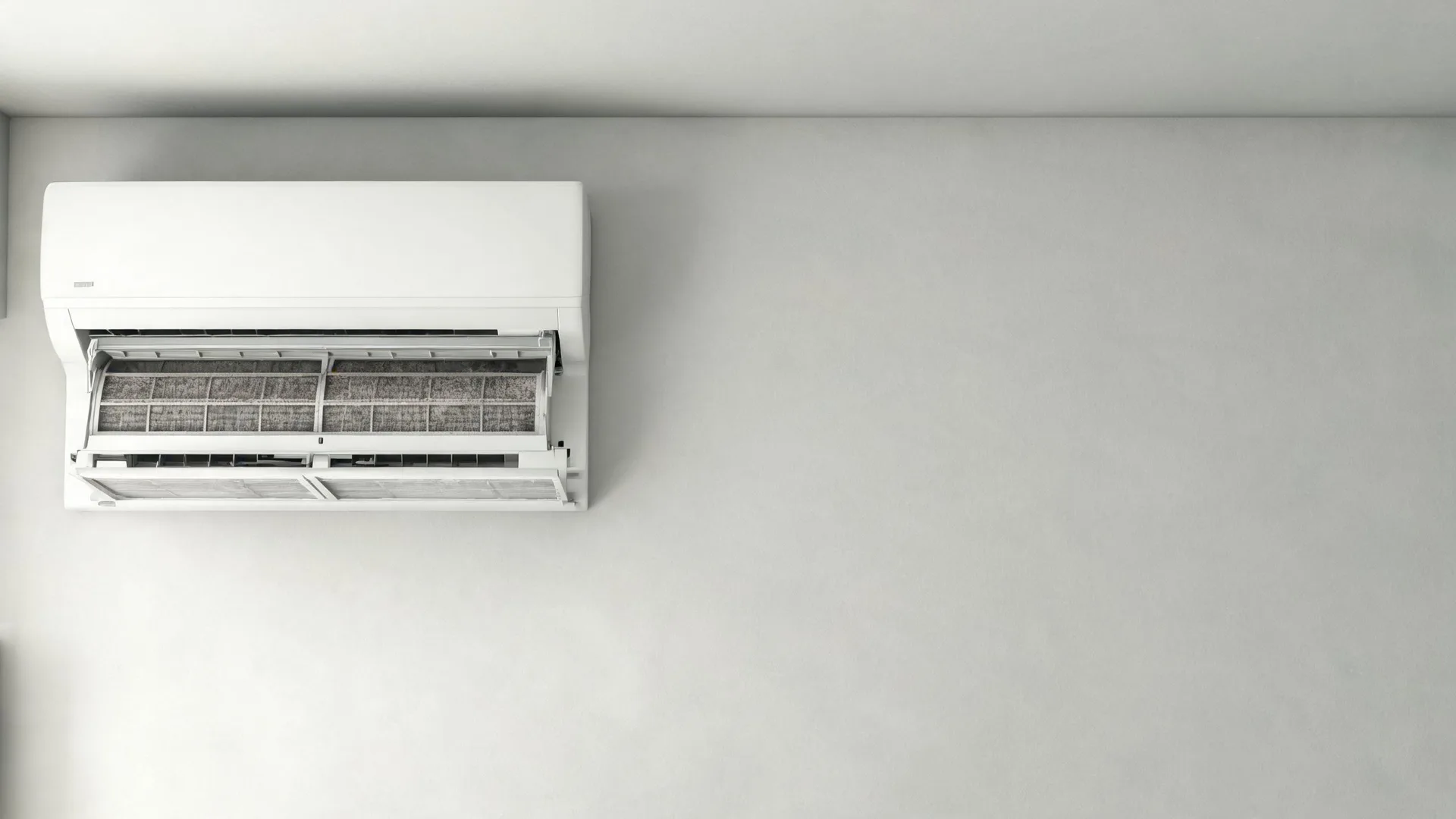
Refrigerant lines and wiring have to travel from the outdoor unit to each indoor head, and that path matters more than the straight-line distance suggests. Running lines through an attic, down an exterior wall, or through brick takes more time and more material than a short shot through a single wall. A contractor can only quote the labor once they have seen the actual path the lines will take.

Sizing a mini split comes down to the heat gain in the room it serves, not the square footage on a listing sheet. Rooms of the same size can carry very different loads depending on which way the windows face, how many walls sit against the outdoors, and what's on the other side of the ceiling. A contractor works that out room by room, then matches it to a unit's rated output at the conditions this zone actually sees, not the number printed in bold on the box. Go too small and the unit runs flat out without ever catching up on the hottest afternoons. Go too big and it satisfies the thermostat fast, shuts off, then kicks on again a few minutes later, cycling all day instead of running in long steady stretches. Short cycling like that is harder on the compressor than a long run ever is, and it leaves the room colder in spots and warmer in others because the air never gets time to mix.

A few questions separate a careful bid from a guess. Ask what the rated output is at this zone's actual winter and summer conditions, not just the number on the box, since every unit loses capacity as it gets colder outside and that drop varies between models. Ask what the sound rating is for the indoor head and the outdoor unit, especially if either one will sit near a bedroom window. Ask how many refrigerant joints the installation will need, since every brazed joint is a spot that can leak, and fewer joints done well beats more joints done fast. Ask whether the line set will be insulated along its whole run, not just the easy stretches, because an exposed section loses efficiency and can sweat. Ask what the warranty covers if the unit was not installed by someone certified on that brand, since many manufacturers tie full coverage to that. Last, ask for the load calculation in writing, room by room, so you can compare it against what any other contractor proposes for the same space.