





An outdoor air conditioning condenser unit on a concrete pad next to the gray vinyl siding of a residential home.

AC Maintenance in Little Rock, AR

Tell us about the job

Takes about a minute. No obligation.

Tune-up, service, or cleaningCentral ACPulaski County, AR
Step 1 of 2

What ZIP code is the job in?

Between visits, check the air filter and change it when it looks gray or clogged. A dirty filter is the most common reason an air conditioner starts working harder than it should. Walk outside and look at the condenser unit. It needs clear space around it, so pull back any grass clippings, leaves or mulch that have built up against the cabinet. Inside, keep an eye on the vents and make sure furniture or curtains aren't blocking them. If you see ice on the refrigerant lines or notice the system running without cooling the house, turn it off at the thermostat and let it rest before calling someone. Running it iced over can damage the compressor.

5 months
May through September, your air conditioner is on duty
91°F
the average summer afternoon it cools against
97 hail events
in ten years, and hail bends the fins on outdoor coils
178 wind events
in ten years, and wind drives debris into outdoor units
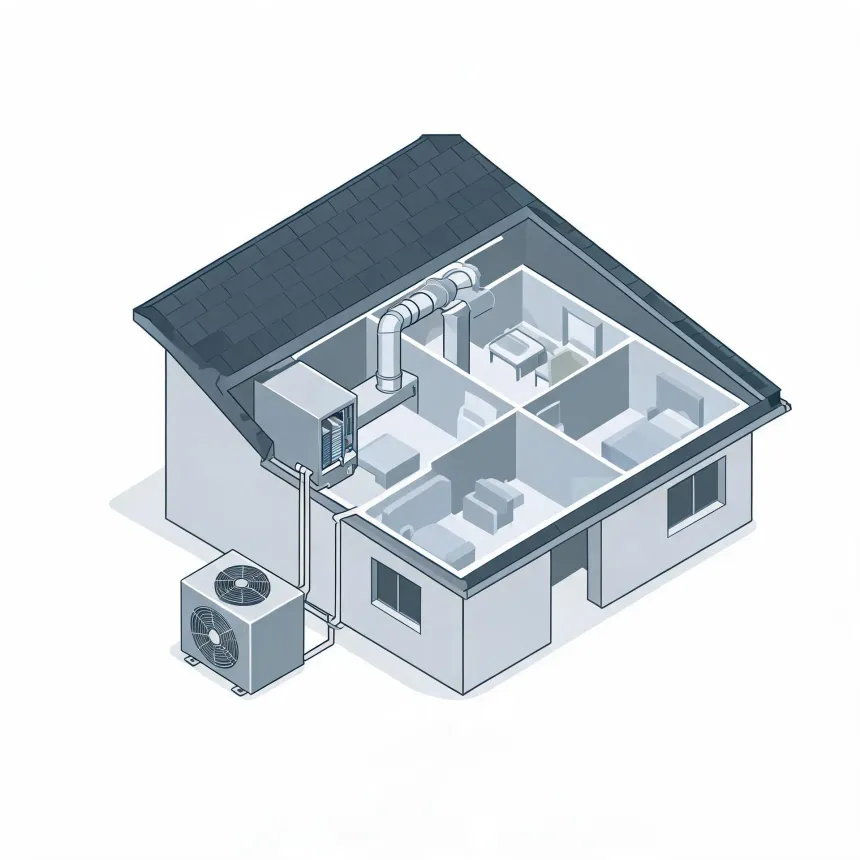
Isometric cutaway illustration of a single-story house showing interior rooms, ceiling ductwork connected to an indoor air handler, and an outdoor condenser unit beside the exterior wall.
Your air conditioner works hardest from June through September.

NOAA nClimDiv, 1991–2020 normals

One AC tune-up a year covers what matters.

The technician checks the refrigerant charge and electrical connections once, before summer, and that holds for the season.

Cooling starts in May here, so get the check done in April

Cooling runs May through September
Summer afternoons average 91°F
178 damaging wind events from 2015 to 2024

A thorough tune-up means the technician actually opens the unit up. The capacitor gets pulled and tested under load, not just eyeballed, because a weak one can read fine sitting still and still fail on the first hot day. The refrigerant charge gets checked against the system's actual pressures instead of topped off by feel. The condenser coil gets cleaned where the fins are packed tight, not just hosed off on the surface. The contactor gets checked for pitting, since a worn one is a common reason a unit stops turning on at all. A quick visit skips most of this and just glances at the filter and coil before moving on. If nobody opens the panel or gives you a number for your refrigerant pressure, you got the quick version instead of the real one.

Five months of Arkansas summer wears on a system fast

Five months of afternoon highs near 91°F is a lot of run time on one machine. Add in the wind and hail that come through here most years, and the system goes into summer already carrying some wear before the first hot week even hits. Get it looked at before it has to work.

Find a contractor
A man in a cap, gray shirt and jeans, seen from behind, carries a canvas tool bag up porch steps toward a green front door flanked by potted shrubs.
An outdoor air conditioning condenser unit mounted on a concrete pad beside a house, with electrical conduit running to a wall-mounted disconnect box.

Book it before the season starts, not into it

May through September is five months of this system running most days, and once that stretch starts, a tech is looking at a unit that's already been working instead of one that's rested. Book the check before the season starts, not into it.

The house takes longer to cool than it used to

The thermostat is set where it always was. The air coming out still feels cold. But the system runs longer to get the house down, and that extra run time is usually the first sign of a dirty coil or a charge that's gone low.

A new sound from the unit

A squeal when it starts, a rattle from the outdoor cabinet, a hum with no air moving behind it. Each one points to something specific, a failing motor, a loose panel, a capacitor going bad. None of these clear up on their own, and running the system through them tends to take other parts down too.

An outdoor air conditioning condenser unit installed beside the exterior wall of a blue vinyl-sided house at sunset.

Book your AC tune-up in April, before homes here start needing cooling in May.

  1. Jan
  2. Feb
  3. Mar
  4. Apr
  5. May
  6. Jun
  7. Jul
  8. Aug
  9. Sep
  10. Oct
  11. Nov
  12. Dec

A tune-up checks the refrigerant charge, cleans the coils, tests the capacitor and tightens the electrical connections.

A tune-up also means checking the blower motor and the fan belt or wheel that moves air across the evaporator coil, since weak airflow on the inside stresses the whole system even when the outside unit is clean. The tech should check the blower wheel for dirt buildup, which throws it off balance and wears the motor bearings over time. They'll measure the temperature drop across the coil to see if the system is actually pulling heat out of the air the way it should, not just blowing air that feels cool. Drain lines get checked too, because a clogged condensate line backs up and can shut the system down or leak into the house. The thermostat gets tested last, confirming it's calling for cooling correctly and the system responds when it should.