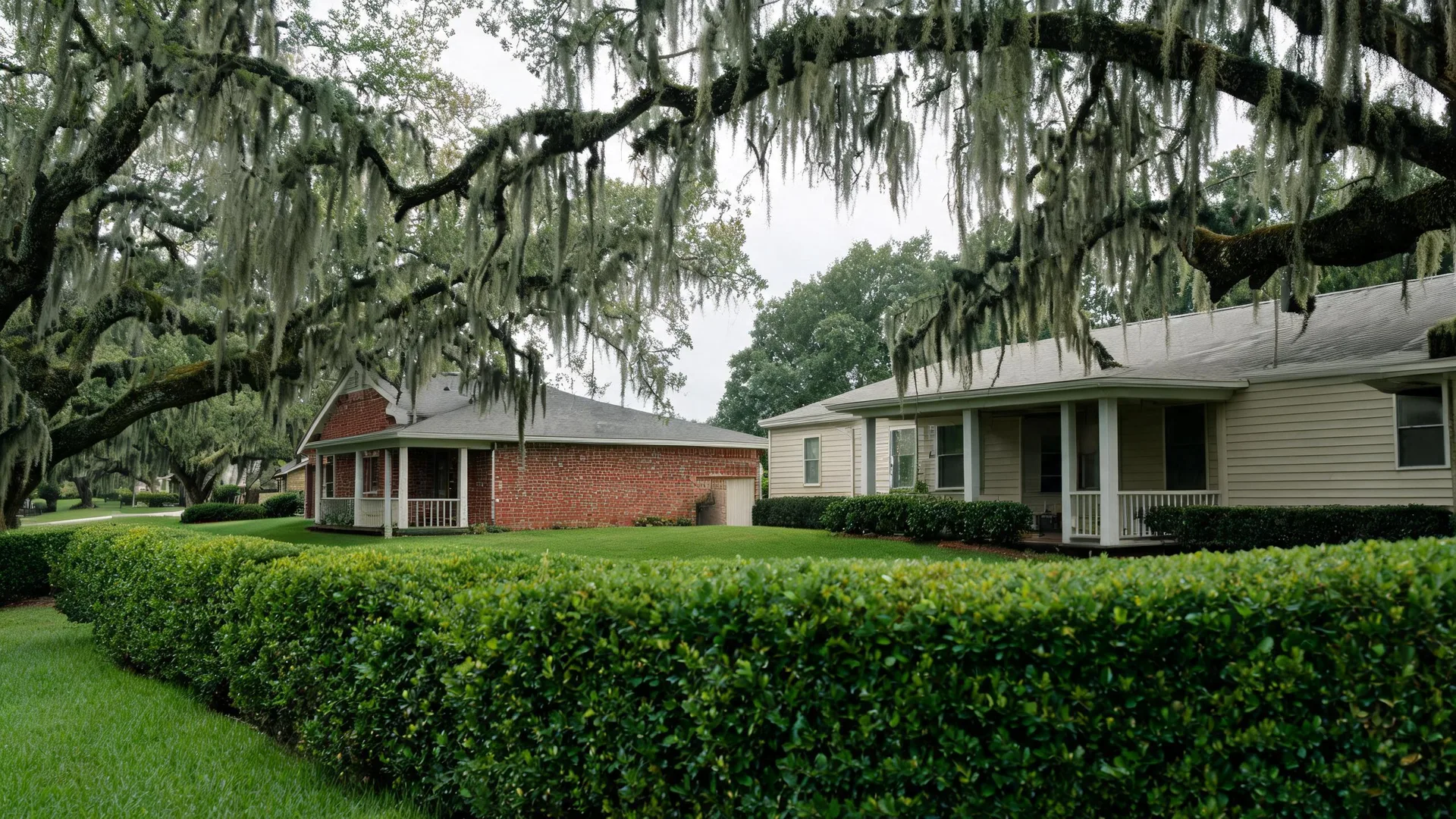







Two single-story houses, one brick with a covered porch and one with pale siding, seen across a mown lawn and a trimmed hedge, beneath large oak branches draped with Spanish moss.

AC Installation in Paragould, AR

Tell us about the job

Takes about a minute. No obligation.

New system or replacementCentral ACGreene County, AR
Step 1 of 2

What ZIP code is the job in?

A good contractor sizes your new air conditioner with a load calculation, not by matching whatever was there before or guessing off square footage. That calculation looks at your windows, your insulation, your ceiling height, which walls face the sun, and how many people live in the house. Go too big and the unit cools the air fast but shuts off before it pulls the moisture out, so the house feels cold and clammy at the same time. Go too small and it runs constantly on the hottest days and still can't keep up. Either mistake also wears the system out faster, since short cycling and nonstop running both put more strain on the compressor than steady, even runs. The right size is the one that runs long enough to dehumidify the air, then shuts off.

5 months
May through September, your air conditioner is on duty
89°F
the average summer afternoon it cools against
35 hail events
in ten years, and hail bends the fins on outdoor coils
13.4 SEER2
the federal minimum any new unit must meet
Isometric line illustration of a cutaway single-story building showing interior rooms, ceiling ductwork, an indoor air handler, and an outdoor condenser unit connected by a line set.
Your air conditioner works hardest from June through August.

NOAA nClimDiv, 1991–2020 normals

Arkansas electricity averaged 12.32 cents per kilowatt-hour in 2024, cheaper than most states.

A high-efficiency air conditioner costs more to install, and that lower rate means it takes longer to earn the difference back.

Greene County gets hit by weather, not by heat. Size the system for the house, not the storms.

99 severe weather events from 2015 to 2024
24% of homes statewide lost power a day or more in 2024
42 damaging wind events from 2015 to 2024
May through September, this has to workHomes here run cooling May through September. April is the month to get it in.

Most homes in Greene County heat with electricity, 74.7% of them. That usually means a heat pump or an electric furnace paired with the air handler, and if that's what you have now, a new AC often ties into the same setup. Gas heat is less common here, at 12.1%, with 9.9% running on bottled, tank or LP gas. If your furnace runs on gas or propane, the new AC still has to match the existing coil and ductwork, not just the furnace. Either way, the contractor sizing your system needs to know what's already there before pricing out the swap.

Five months of 89 degree afternoons is what this system has to meet

Cooling runs here from May through September, with afternoon highs averaging 89°F across June, July and August. That is five months of steady work for whatever gets installed. A system sized right for this house will handle that load season after season. One sized wrong either runs nonstop trying to keep up or wears out faster than it should. Get the load calculation done before deciding what to install.

Find a contractor
A man in a cap, dark shirt and tan work pants walks up porch steps toward a green front door, carrying a canvas tool bag at his side, with a potted shrub beside the entry.
A gray residential air conditioning condenser unit mounted on a concrete pad outdoors, surrounded by green grass under a partly cloudy blue sky.

This runs every summer, not just this one

Five months of 89 degree afternoons, year after year, is a lot of hours on a compressor. Whatever gets installed this spring will still be running those same hours next summer and the one after that. That is why the load calculation matters before anything else gets decided. A system sized to this house holds up under that kind of use. A system sized off a guess starts showing wear within a few seasons, not years down the road.

The rating measures efficiency, not cooling power

SEER2 tells you how much cooling a system delivers for the electricity it uses. It says nothing about how big a house it can handle or how fast it cools a room. A high SEER2 unit that's sized wrong for the house still runs poorly. The rating and the load calculation answer different questions, and both need answering before you buy.

A higher number costs more to install

Units with a higher SEER2 rating use larger coils and often a variable-speed compressor instead of a single-speed one, and that adds to the install price. That higher rating pays back through lower electric bills, but only over years of running. Whether that trade makes sense depends on how long you plan to stay in the house.

An outdoor air conditioning condenser unit positioned beside a blue-sided house at sunset.

Going above the federal minimum saves little here, about $20 a year.

  • A higher-efficiency unit$280 a year
  • A new unit at the federal minimum, 14.3 SEER2$300 a year

Estimates for a typical Greene County home, from EIA household energy data, Arkansas fuel prices and NOAA climate normals. Your home will differ.

Once the new system is sized and picked, the old one still has to come out. A contractor disconnects the refrigerant lines, recovers whatever refrigerant is left in them instead of venting it, and then disconnects the power. The old condenser gets hauled off, and if the coil inside the air handler is being swapped too, that comes out the same way. Older systems often used a refrigerant that's no longer produced, and that's part of why recovery matters rather than just unhooking the lines. None of this touches your ductwork. If the ducts are staying, the new system ties into what's already run through the house.