





Single-story brick and siding houses with covered porches behind a trimmed hedge and lawn, framed by large oak branches draped with hanging moss under an overcast sky.

AC Installation in Mena, AR

Tell us about the job

Takes about a minute. No obligation.

New system or replacementCentral ACPolk County, AR
Step 1 of 2

What ZIP code is the job in?

Most homes in Polk County heat with electricity, close to six in ten. That makes an electric furnace or heat pump the straightforward match when a system needs replacing, since the ductwork and panel are usually already set up for it. Gas heat is far less common here, at under a fifth of homes, with another chunk running on bottled or LP gas instead of a utility line. If your home already runs on electric heat, pairing it with a new AC or going with a heat pump that handles both sides is the simplest path. Check which fuel your current furnace uses before assuming, since propane tanks and gas lines do turn up in some homes here.

5 months
May through September, your air conditioner is on duty
89°F
the average summer afternoon it cools against
26 hail events
in ten years, and hail bends the fins on outdoor coils
13.4 SEER2
the federal minimum any new unit must meet
Isometric cutaway illustration of a single-story house showing interior rooms with furniture, attic ductwork connected to an indoor air handler, and an outdoor condenser unit on a pad linked by refrigerant lines.
Your air conditioner works hardest from June through September.

NOAA nClimDiv, 1991–2020 normals

AC here runs May through September.

Get the new system in during April, so it's already running before the first hot day instead of going in during one.

Power here is cheap, so a basic system earns its keep as fast as a high-efficiency one

Power costs 12.32 cents a kWh statewide
Cooling runs May through September
Summer afternoons average 89°F

Mena sits in a warm zone with a long stretch of AC weather and only a short, mild winter. Any new split-system air conditioner put in here has to clear 14.3 SEER2 if it's rated below 45,000 Btu/h, higher than what manufacturers have to meet nationally. That's because the Southeast carries its own higher minimum. In practice, the lower-rated units sold in cooler parts of the country aren't an option here, new or replacement. A federal tax credit is available on top of whatever the installed system qualifies for.

Go with the standard fit

A standard size and efficiency fit fine here. There's no local reason to go bigger or pricier.

Find a contractor
A man in a cap, long-sleeve shirt and brown work pants carries a worn canvas tool bag up porch steps toward a green front door, with a potted shrub beside the entry.
A gray residential air conditioning condenser unit mounted on a concrete pad outdoors, surrounded by green grass under a partly cloudy blue sky.

The old equipment comes out, not just the parts that quit

Whatever is coming out, the old system doesn't get turned off and ignored. A contractor recovers the refrigerant from the lines before anything is disconnected, since it can't legally be vented into the air. If the old unit is a split system, the outdoor condenser and the indoor coil both come out, because the new coil has to match the new condenser. Mixing an old coil with a new condenser is how you end up with a system that never charges right. If the ductwork is staying, it gets checked while it's open, since this is the easiest point to find a crushed return or a disconnected branch line. Once the new line set goes in, the old copper usually comes out with it rather than getting spliced into, since old copper can carry contamination that ruins a new compressor.

Sizing comes from a load calculation, not the old unit's tag

A contractor measures the square footage, the windows, the insulation, and which way the house faces, then runs a load calculation to find the right tonnage. Replacing an old system with the same size it had before skips that math, and the old one may have been sized wrong from the start.

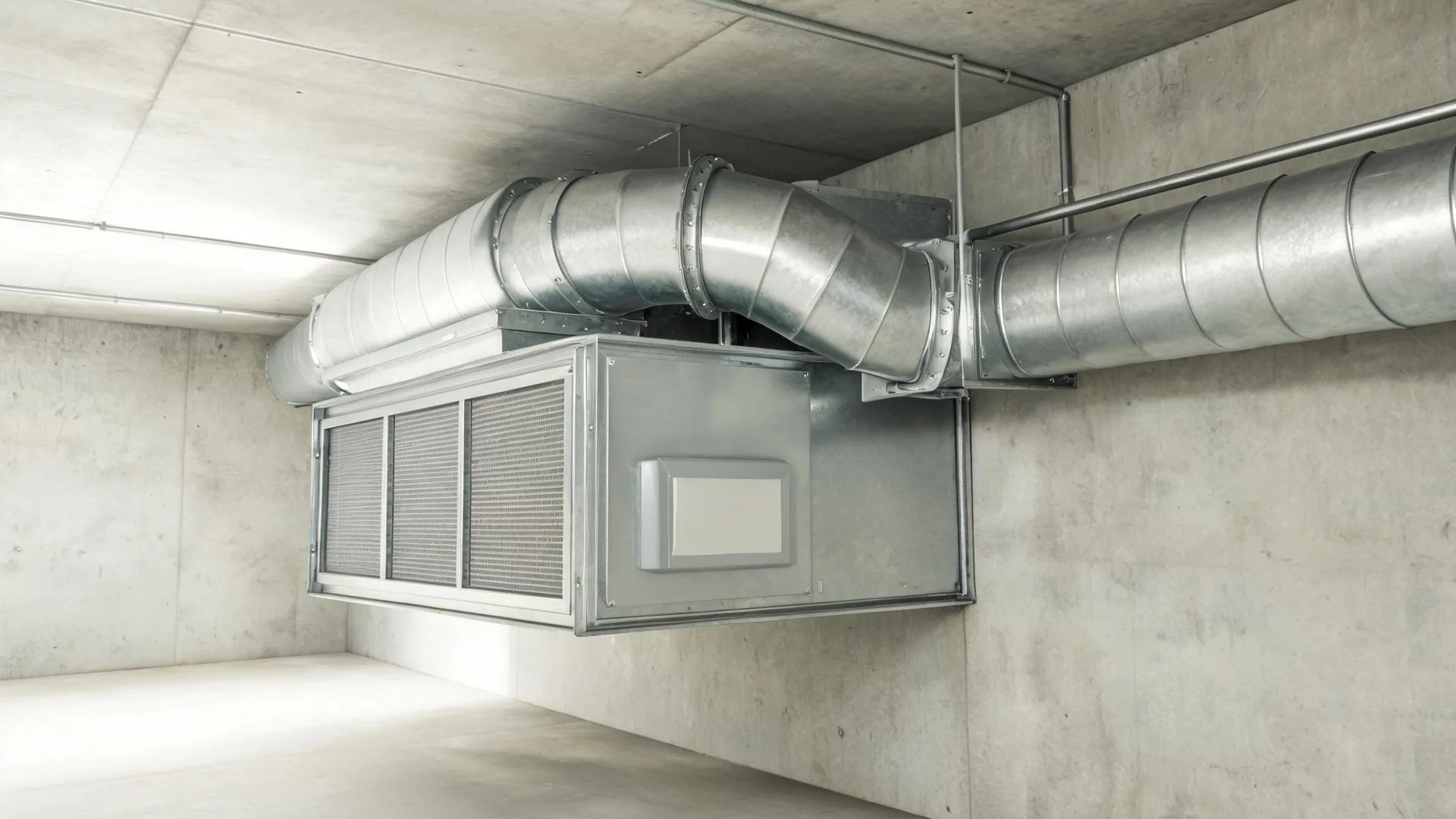
Oversized cools the room but not the air

A unit that's too big blasts the room down to temperature fast, then shuts off before it's run long enough to pull moisture out of the air. The house ends up cool but clammy. The right-sized system runs longer, steadier cycles and actually dries the air while it cools it.

Aerial view of a gray outdoor air conditioning condenser unit mounted on a concrete pad next to a house with vinyl siding.

Going above the federal minimum saves little here, about $20 a year.

  • A higher-efficiency unit$250 a year
  • A new unit at the federal minimum, 14.3 SEER2$270 a year

Estimates for a typical Polk County home, from EIA household energy data, Arkansas fuel prices and NOAA climate normals. Your home will differ.

Installation day starts with a walkthrough. The crew confirms where the new equipment sits and where the line set runs before anything gets cut loose. The outdoor pad gets leveled first, since a condenser sitting crooked wears its compressor mounts unevenly over time. Once the old equipment is out and the new coil is set, the line set gets brazed, then pressure tested, then pulled into a vacuum. That vacuum step matters because trapped air and moisture in the lines are what ruin a compressor early. Refrigerant only goes in after the vacuum holds, never before. The last step is a startup check, where the airflow across the coil and the refrigerant charge both get measured against what the manufacturer specifies. A system that's wired up and blowing cold isn't the same as one that's actually been checked.