A nighttime street scene featuring a row of lit white colonial-style houses with wrap-around porches, flanked by oak trees draped in Spanish moss.

AC Installation in Conway, AR

Tell us about the job

Takes about a minute. No obligation.

New system or replacementCentral ACFaulkner County, AR
Step 1 of 2

What ZIP code is the job in?

Storms come through often here

Faulkner County logged 174 severe weather events between 2015 and 2024, with damaging wind the most common. An outdoor condenser sitting in the open takes that wind and hail directly, so where it goes and what shields it matters.


Power doesn't always come right back

Nearly a quarter of Arkansas households were without power for 24 hours or more at some point in 2024. If that happens on a hot day, a new AC system is only as good as the plan for running without one.

5 months
May through September, your air conditioner is on duty
91°F
the average summer afternoon it cools against
64 hail events
in ten years, and hail bends the fins on outdoor coils
13.4 SEER2
the federal minimum any new unit must meet
Isometric grayscale illustration of a cutaway house showing interior rooms, ductwork, an indoor air handler, and an outdoor condenser unit on a pad connected by lines.
Your air conditioner works hardest from June through September.

NOAA nClimDiv, 1991–2020 normals

65.8% of homes in Faulkner County heat with electricity.

An electric-heat home usually already has an air handler or heat pump in place, so the new AC has to work with that equipment.

April is the month to put a new system in, before May asks anything of it

Cooling runs May through September
Summer afternoons average 91°F
90 damaging wind events from 2015 to 2024
A standard system is right for ConwayArkansas homes paid 12.32 cents per kilowatt-hour in 2024, nothing here calls for oversizing

Talk to the installer about where the condenser will sit before it goes in. A spot against the house or behind a fence line takes less direct hail than one out in the open yard. Some installers will set it on a pad with a cover or cage option for the coil fins, worth asking about given how often hail shows up here. For the power side, ask what the system needs to restart on its own once the outage ends, and whether a generator or battery setup could carry the AC along with the furnace blower and the water heater controls. None of that has to be decided today, but it's worth asking before the install date, not after the next storm.

This system will run hard every summer here, so size it right from the start

Summers here run long, five months of cooling with afternoons averaging 91°F through June, July and August. A system sized and installed right holds up to that kind of use. One sized wrong, or put in cutting corners, shows the strain within a season or two.

Find a contractor
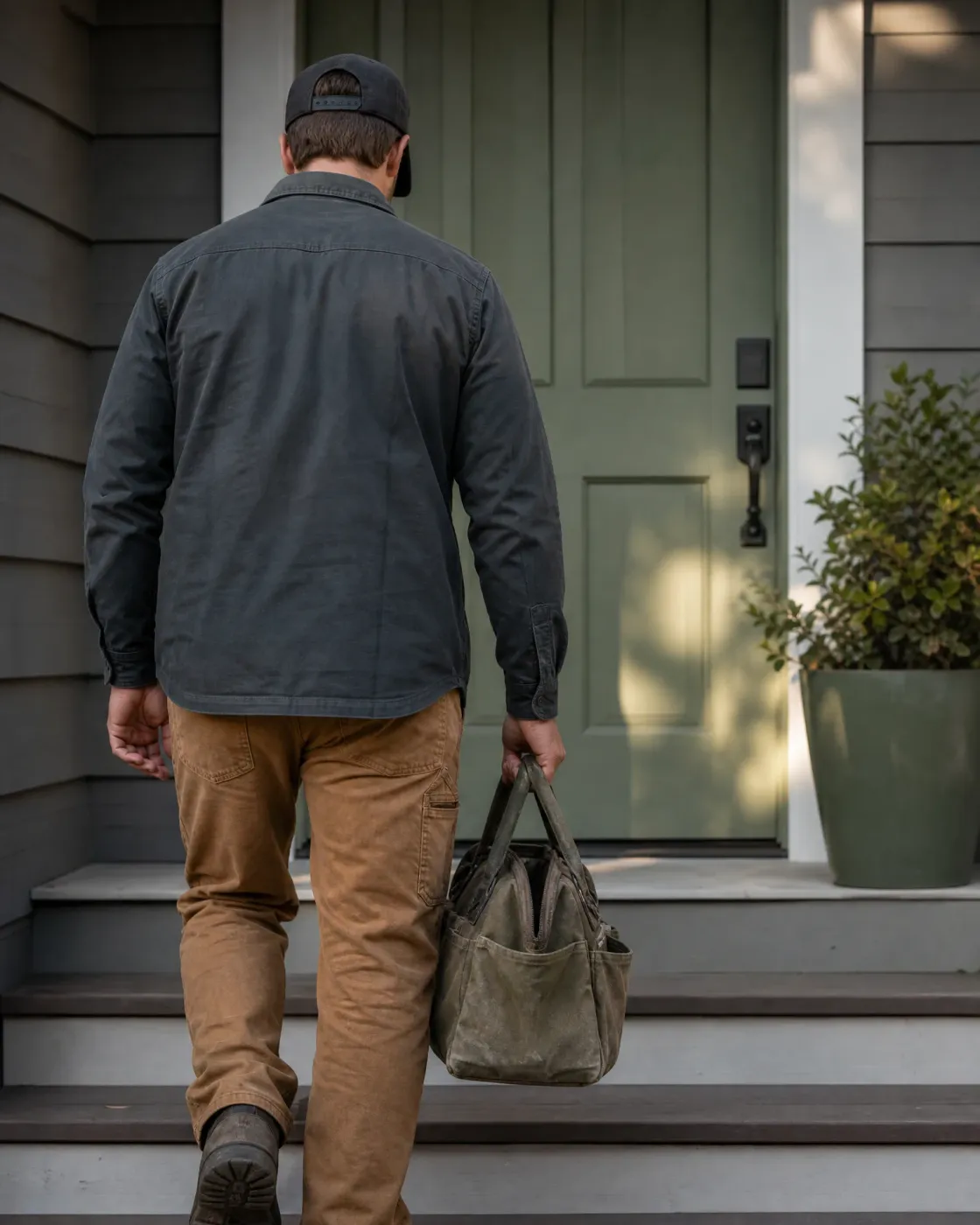
A man seen from behind in a backward cap, dark jacket and tan work pants carries a waxed canvas tote bag up steps toward a green front door, with a potted shrub beside the entry.
An outdoor air conditioning condenser unit mounted on a concrete pad surrounded by gravel, photographed against a partly cloudy blue sky.

Five months of 91 degree afternoons, every year this system is in

That five-month stretch at 91 degrees is the test a new system faces every year, starting the first summer. Ask the installer to size it off a load calculation for your house, not just the square footage or what the old unit was rated for. A unit sized right runs long, steady cycles that hold the temperature. One that's oversized short-cycles, and one that's undersized runs flat out all afternoon and still falls behind.

The old condenser and coil get hauled away

The installer disconnects the old unit, recovers the refrigerant from the lines, and takes the outdoor condenser and the indoor coil with them when the job's done. Refrigerant can't legally be vented into the air, so a licensed contractor has the equipment to pull it out and handle it properly. You shouldn't be left with a dead unit sitting in the yard.

The line set and pad usually stay

If the copper line set running between the old condenser and the coil is in good shape, the installer may reuse it instead of running new line. Same with the concrete pad the condenser sits on. Reusing what's sound keeps the job simpler, but if the old line set is kinked, corroded, or the wrong size for the new system, it gets replaced along with everything else.

An outdoor air conditioning condenser unit installed beside the exterior wall of a blue vinyl-sided house at sunset.

Going above the federal minimum saves little here, about $10 a year.

  • A higher-efficiency unit$310 a year
  • A new unit at the federal minimum, 14.3 SEER2$320 a year

Estimates for a typical Faulkner County home, from EIA household energy data, Arkansas fuel prices and NOAA climate normals. Your home will differ.

The old equipment comes out first. Then the new indoor coil and outdoor condenser go in, and the line set gets connected and sealed. Before any refrigerant goes in, the installer pulls a vacuum on the lines. That clears out air and moisture that would otherwise sit in the system and cause problems later. Once the system is charged, the installer checks the charge against the manufacturer's specs, checks airflow at the vents, and confirms the thermostat is talking to the new equipment the way it should. Expect some noise during the work, and a stretch where power to that circuit is off. By the time the installer leaves, the system should be cycling on its own and holding the temperature you set without any adjusting.