







Two single-story houses, one brick and one with pale siding, both with covered porches, sit behind a mowed lawn and a trimmed hedge, framed by large oak branches draped with Spanish moss under an overcast sky.

AC Installation in Bull Shoals, AR

Tell us about the job

Takes about a minute. No obligation.

New system or replacementCentral ACMarion County, AR
Step 1 of 2

What ZIP code is the job in?

Most houses in Marion County run on electric heat, 59.1% of them. Gas, whether piped or delivered as propane, heats a lot fewer homes out here. That matters for an AC installation because a home already wired for electric heat often has the panel capacity an electric air handler or heat pump needs. If your place is one of those, pairing new cooling with equipment built around that same electric setup tends to be the straightforward route. Worth checking what your current system runs on before you decide what to replace it with.

5 months
May through September, your air conditioner is on duty
88°F
the average summer afternoon it cools against
25 hail events
in ten years, and hail bends the fins on outdoor coils
13.4 SEER2
the federal minimum any new unit must meet
Isometric cutaway illustration of a single-story house showing interior rooms with ductwork and an air handler, connected by refrigerant lines to an outdoor condenser unit on the left.
Your air conditioner works hardest from June through August.

NOAA nClimDiv, 1991–2020 normals

The old condenser and coil don't just get left behind once the new system goes in.

Whoever installs your new AC should haul away the old equipment and deal with the refrigerant properly, so ask what that includes before you sign anything.

Cheap power here means payback matters less than picking equipment that lasts

Power costs 12.32 cents a kWh statewide
Cooling runs May through September
Summer afternoons average 88°F
Have cooling ready before MayCooling here runs May through September. April is the month to get it installed.

Marion County sits in climate zone 4A, which asks real work of both sides of a system, heating and cooling alike. Because this county falls in the Southeast region, a new central air conditioner installed here has to meet 14.3 SEER2 if it's rated below 45,000 Btu/h, a notch above what the rest of the country is held to. Larger systems have their own, slightly lower minimum. It narrows what a contractor can legally put in your home, so a unit quoted below that number isn't one you can install here regardless of price. Worth asking straight out whether the system on your quote clears the regional minimum or just the national one.

A standard system, sized right, is what this county needs

Marion County has seen its share of wind, hail and the occasional tornado over the past decade. None of that changes what a system here needs to be. A standard size, matched to your home, running at the efficiency already required for this region, is what holds up. No reason to size up or chase a higher rating than that. Get it installed before the cooling months start.

Find a contractor
A man in a dark long-sleeve shirt and tan work pants carries a worn tool bag up concrete steps toward a green front door of a house with siding and a potted shrub.
An outdoor air conditioning condenser unit mounted on a concrete pad beside a house, with electrical conduit running to a wall-mounted disconnect box.

Sizing comes from a calculation, not a guess

A contractor works out size with a load calculation, not by matching what's already outside. That means measuring the square footage, but also the windows, the insulation, the ceiling height, which way rooms face. Homes that look alike on the outside can need different tonnage once those details are in. Go too big and the unit cools the air fast without running long enough to pull the moisture out, so the house ends up cold and clammy at the same time. Short cycles like that wear on the compressor too, since starting up strains it more than running does. Go too small and it runs constantly through the hottest stretch, struggling to catch up and never quite getting there. Sized right, it runs in long, steady stretches that bring down heat and humidity together, which is the whole job.

Ask what the warranty actually covers

A manufacturer warranty on parts is not the same as a labor warranty from whoever installs the system. If a compressor fails under warranty but the contractor who put it in is no longer around, or never offered labor coverage, the part is free and the work to replace it is not. Ask what's covered, for how long, and whether the warranty is void if someone other than the installer touches the system later.

Ask how the new system matches your ductwork

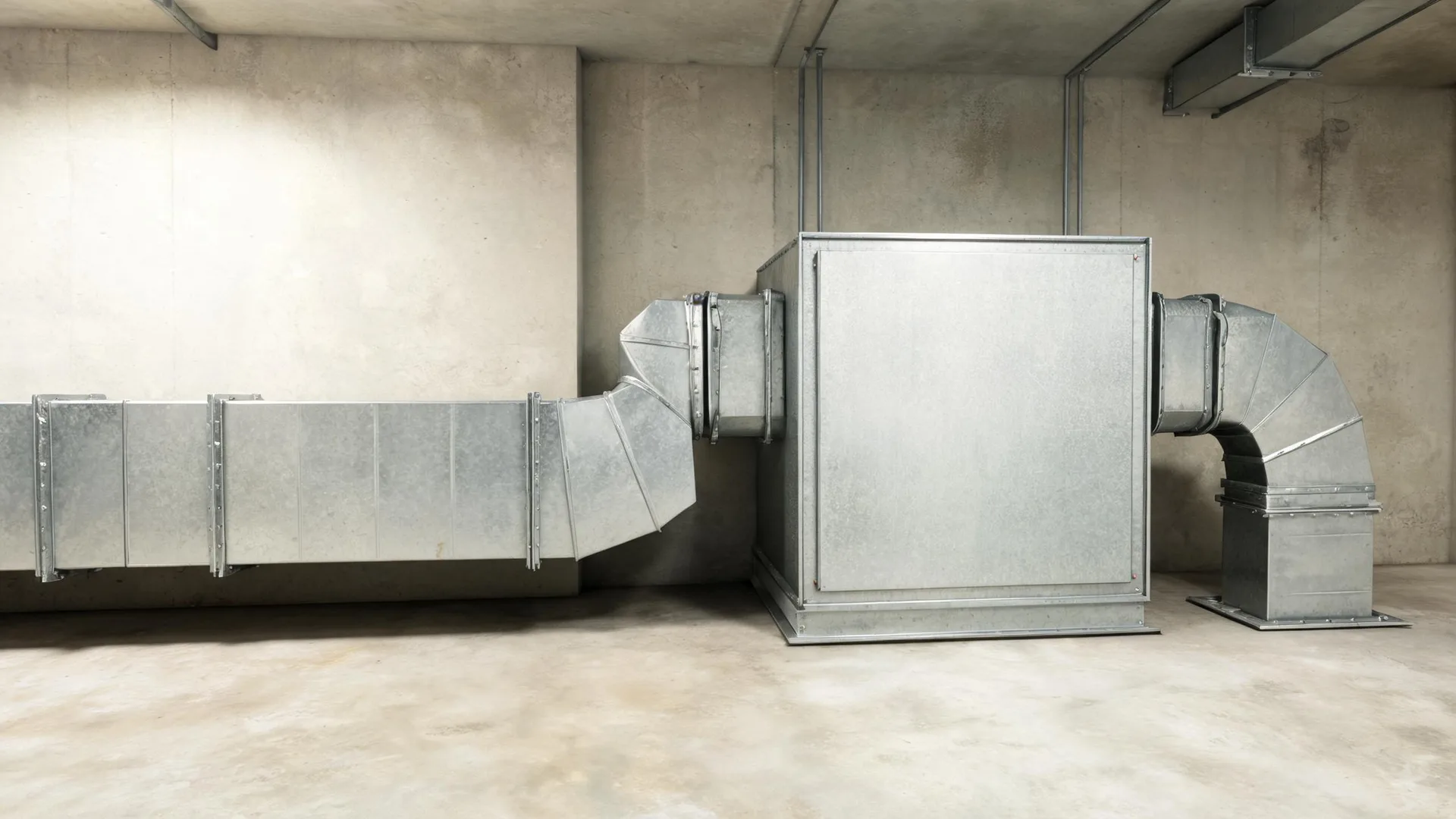
A condenser and coil sized for your home still have to move air through the ducts already in place. Ducts that are too small for the new system's airflow cause weak output at the vents and extra strain on the blower motor, no matter how well the outdoor unit is chosen. A contractor should check duct size and condition as part of the quote, not treat it as a separate problem to find later.

An outdoor air conditioning condenser unit mounted on a concrete pad next to a blue-sided residential house at sunset.

Going above the federal minimum saves little here, about $10 a year.

  • A higher-efficiency unit$230 a year
  • A new unit at the federal minimum, 14.3 SEER2$240 a year

Estimates for a typical Marion County home, from EIA household energy data, Arkansas fuel prices and NOAA climate normals. Your home will differ.

Installation day starts with the old system coming out, not the new one going in. The line set gets disconnected, refrigerant recovered, and the old condenser and coil removed before anything new is set in place. Expect the power to the outdoor unit shut off for most of the day, and the indoor air handler or coil area to be opened up while the old one comes out and the new one gets set and sealed. A good crew pressure tests the new line set before charging it, since a leak there shows up months later as a system that's slowly losing cooling. Once the new equipment is in, it gets charged to the manufacturer's spec and run through a cycle so airflow and temperature split can be checked at the vents, not just at the unit. That last check matters more than people think. A system can be installed correctly and still perform poorly if the charge or airflow isn't verified before the crew leaves.