Why your heat pump runs on emergency heat in Arkansas

A local pro who knows heat pumps gets your details and gets in touch.

Get matched

Your heat pump switches to emergency heat when it can't pull enough warmth from the outside air on its own, so it leans on the backup electric strip heat instead. That switch happens automatically if the outdoor coil ices up and stays that way, if the system is low on refrigerant, or if a part like the reversing valve or defrost control has failed. It also happens if someone flips the thermostat to "emergency heat" by hand, which some homeowners do during a cold snap without knowing it bypasses the heat pump entirely. Either way, it's a sign something upstream isn't working right, not a normal setting to leave on. Running on emergency heat for a night is fine. Running on it for days means you're heating the house on electric strips alone, which costs more and won't fix whatever knocked the heat pump offline in the first place.

A beige outdoor air conditioning condenser unit on a concrete pad beside a house with horizontal vinyl siding, with refrigerant lines and a disconnect box on the wall, surrounded by dark mulch and a green shrub at left.

Normal defrost cycle

Every so often in winter the outdoor unit pauses, the fan stops, and you might see steam coming off it. That's the coil shedding ice it picked up pulling heat from cold air. It runs for a few minutes, then switches back to heating on its own.

An outdoor air conditioner condenser unit on a concrete pad beside a house with beige horizontal siding, with conduit running from an electrical box on the wall.

Stuck in emergency heat

The outdoor unit sits idle, maybe still iced over, while the house heats off the strip heat alone. It stays that way until someone fixes what's wrong, whether that's a frozen coil that won't clear, a bad sensor, or a compressor that won't start.

Emergency Heat: Normal or a Problem

Normal switch

  • Outside temperature drops low enough that the heat pump alone can't keep up, so the strip heat kicks in to cover the gap.
  • You asked the thermostat to jump several degrees at once, and the system brings on emergency heat to get there faster.
  • A short cold snap passes through and the heat pump switches back on its own once the outdoor air warms back up.
  • The switch lasts a few hours at most and the house stays warm the whole time without you noticing anything but the sound of the strip heat running.

Something's wrong

  • Emergency heat stays on for days at a time, even when it isn't especially cold outside.
  • The outdoor unit sits still and never seems to run at all, no fan, no compressor noise, nothing.
  • Your electric bill jumps well beyond what you'd expect for a stretch of cold weather, because strip heat costs more to run than the heat pump.
  • The thermostat shows an emergency heat light on its own, without you having switched it there.
  • Rooms that used to stay even now feel colder than the thermostat setting, even with emergency heat running.
  • The system switched to emergency heat and never switched back, even after the weather turned milder.
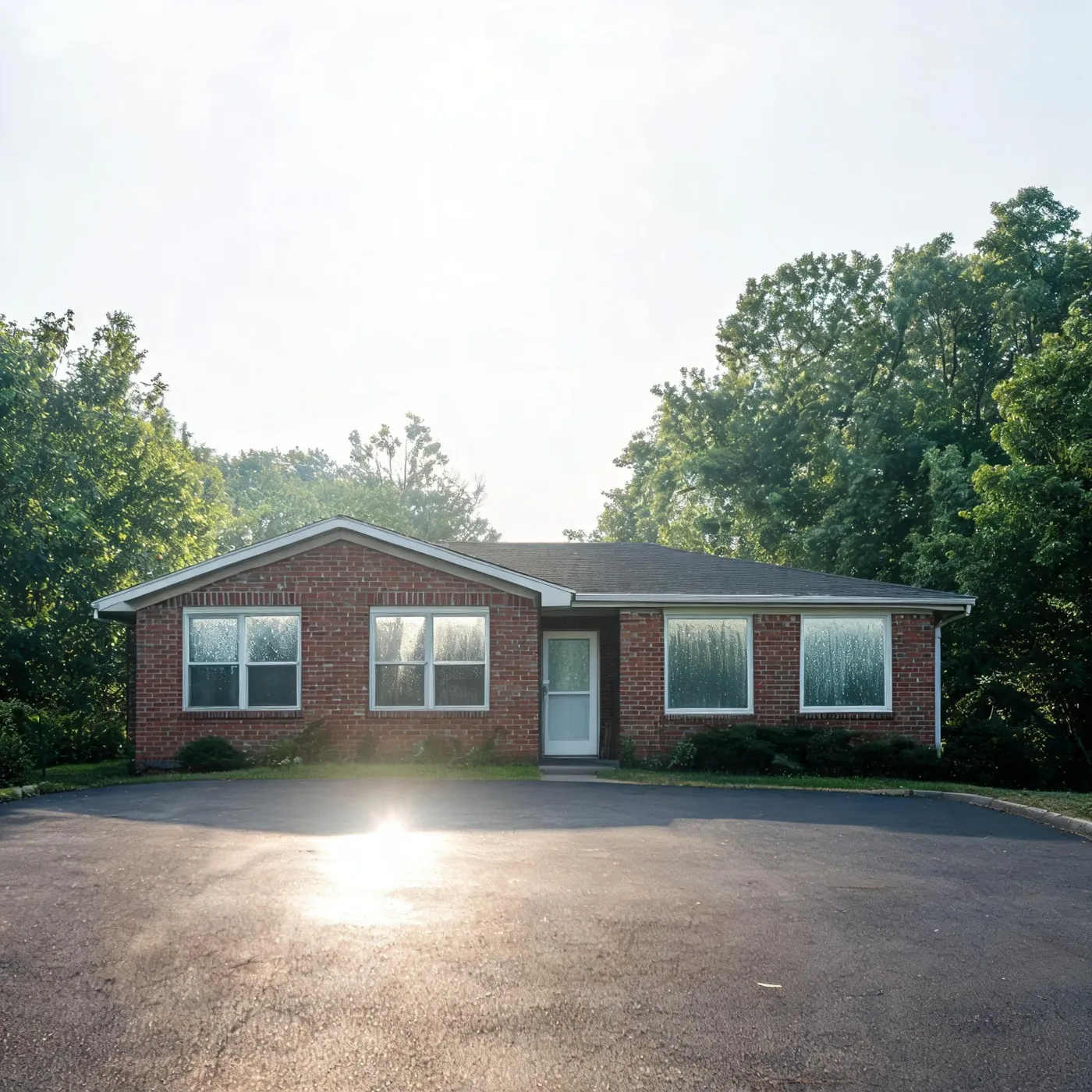
A single-story red brick ranch house with white-framed windows and a white storm door, fronted by a large asphalt parking area and backed by leafy green trees under a bright hazy sky.

Summer air here holds a lot of moisture. Averaged across June, July and August, the dew point in Arkansas sits at 68°F, according to NOAA climate records. That's heavy, sticky air, and it makes your heat pump's outdoor coil work harder just to pull heat out of it in the cold months, since humid air holds onto moisture that forms frost faster once temperatures drop. More frost means more defrost cycles, and a coil that can't shed ice fast enough is one reason the system falls back on emergency heat. If your heat pump switches over more than you'd expect for how cold it actually is outside, this is often why.

NASA POWER T2MDEW county cells weighted by homes

An outdoor condenser unit on a concrete pad beside a gray lap-sided house, with an electrical disconnect box and conduit on the wall and shrubs with mulch to the right.
The coil's clear, the fins are clean, and the unit sits ready to pull heat from the cold air without help.
An outdoor air conditioner condenser unit on a concrete pad beside a house with horizontal vinyl siding, with refrigerant lines and an electrical disconnect box on the wall and dry leaves on the ground.
Dirty fins and leaves packed around the base choke airflow, so the system falls back on emergency heat more than it should.
A woman with long wavy brown hair in a grey ribbed sweater sits on a couch indoors, looking toward a window, with a potted palm-like plant and fireplace behind her.
A woman with long brown hair wearing a green V-neck top and beige cardigan sits on a light sofa, looking off to the side, with a dining table, lamp and framed picture in the background.
A woman with long dark hair in a cream knit sweater sits on a beige sofa indoors, looking toward a bright window with a houseplant and framed picture in the background.
A woman with long dark hair in a green knit sweater sits on a couch indoors, smiling and looking toward a window with a blurred room behind her.

A local pro for your heat pump repair

A heat pump that keeps dropping into emergency heat is telling you something is wrong, not just that it's cold outside. In Arkansas most homes lean on electricity for heat, and strip heat costs more to run than the heat pump does on its own, so a system stuck on it will show up on your bill even with power priced low here. Sometimes the fix is small, a dirty filter or a thermostat setting. Sometimes it's a failing defrost control or a sensor telling the system something false. Either way, you don't have to work out which from the thermostat. A licensed contractor who works on heat pumps in Arkansas winters sees this exact complaint every year and knows where to look first. You get matched with one contractor, local to you, who takes it from there. No need to keep watching the strip heat kick in wondering if it will stop on its own.

A dimly lit bedroom at dusk with a made bed, a table lamp on a nightstand, and a condensation-covered sash window with a dark curtain.

It's past midnight in August and you're still awake. The sheets are damp under you, and the window's fogged along the edges where the cold glass meets the thick outside air. You get up and check the thermostat in the hall, the one that still shows a heat reading from last winter's call, and you remember the tech saying the outdoor unit had been stuck on emergency heat for days before anyone noticed. Tonight it's cooling fine, the compressor humming low in the yard, but you lie back down listening for it anyway, waiting to hear if it cycles clean or starts laboring against the mugginess pressing on the coil outside.


Why is the backup heat light staying on at home?

You notice it on the thermostat first, a small light or a word that says "emergency heat" or "aux" when you didn't touch any setting. The air coming out of the vents feels hotter than usual, because strip heat runs hotter than the heat pump does on its own. You might hear the outdoor unit go quiet for long stretches while the system keeps running. Your electric bill is the other place it shows up. Since most homes in Arkansas heat with electricity, strip heat adds real cost on top of what you'd normally pay to keep the house warm. If it stays stuck there through a cold snap, the people relying on that heat are paying more for it and the outdoor unit isn't getting the chance to work the way it's supposed to.

A gray outdoor condenser unit on a concrete pad beside a light-green sided house, surrounded by mulch, ornamental grasses and a shrub, with mowed lawn in the foreground.

Running as it should

This is a heat pump that's keeping up on its own. The pad is clean, the mulch and grass around it are trimmed back, and nothing is blocking the airflow it needs to pull heat from cold air. The disconnect box on the wall is there if a contractor ever needs it, nothing more.

An outdoor condenser unit on a concrete pad beside a horizontal-sided house, with insulated refrigerant lines running to a wall-mounted box, surrounded by bare dirt.

Leaning on backup heat

This unit has some years on it and it shows. Weathering like this doesn't cause emergency heat by itself, but an older system that's losing efficiency is one a contractor should look at if yours keeps falling back on strip heat more than it used to.

How does the thermostat actually decide to switch over to emergency heat?

You've seen the light come on, but you want to know what's actually happening inside the thermostat when it makes that call. It's not guessing or going by a timer. There's a specific signal it's watching for, and once you know what that signal is, the light on the wall stops being a mystery and starts telling you something useful about your system.

It switches when the indoor temperature falls too far behind the setpoint

Most thermostats on a heat pump system have a second stage built in just for this. The heat pump runs on its own first. If the room temperature falls a couple of degrees below what you set and stays there, the thermostat reads that as the heat pump falling behind, and it brings on the electric strip heat to close the gap. It doesn't know why the heat pump is behind. It could be a defrost cycle running long, low refrigerant, or outdoor air too cold for the heat pump to keep up alone. The thermostat only sees the gap between what you asked for and what the house actually has, and it reacts to that gap the same way every time.

A gray-haired woman in a cream knit sweater stands in a dimly lit kitchen at night, looking to her right, with a round loaf of bread in the foreground and a dark window and potted plant behind her.
A woman with her hair in a bun holds a sleeping young child against her chest, both wrapped in a textured beige knit blanket on a sofa in a dimly lit room with a lamp, framed picture, and bookshelf behind them.

Power costs 12.87 cents per kilowatt-hour statewide

At 12.87 cents per kilowatt-hour, every hour your system spends on strip heat instead of the heat pump itself shows up on your bill. Your home heats on electricity already, so a unit that keeps falling back to emergency heat is burning more of it than it should to keep rooms at the same temperature.

EIA-861 2025 statewide residential average

A man seen from behind raises his hand to wave at a woman standing in the open front doorway of a single-story house with gray shingle siding, white columns and a gabled porch entry.

Emergency heat on its own means check the heat pump, not the weather

A light or a short stretch during a hard freeze is the system doing what it's built to do. A light that stays on through an ordinary cold night, or comes on when it isn't even that cold, means the heat pump isn't pulling heat on its own anymore, and something is stopping it. Ice that won't clear, a stuck defrost control, a low charge, a dirty coil. The strip heat will keep the house warm either way, so it's easy to let it run for days without noticing what it's costing you.

A local contractor who works on heat pumps all winter has seen which of those is most likely before they even get to your house, and what to check first once they're there. Share a few details about your system and what the thermostat's been showing, and you'll be matched with one contractor who serves your area and reaches out directly, instead of fielding calls from several companies trying to win the job.

A living room corner with a light beige sofa holding a textured taupe cushion, a large ceramic vase of olive branches by a window, a framed neutral artwork on the wall, and a dark bowl with stacked books in the foreground.
An outdoor air conditioning or heat pump condenser unit sits on a concrete pad surrounded by gravel beside a dark horizontal-sided house, with grass and shrubs nearby.

Get the right pro for your heat pump

Only one pro gets your request, so you hear from one company.

RepairHeat PumpArkansas
Step 1 of 2

What ZIP code is the job in?